
November ONLY: 35% OFF
APS IS OFFERING 35% OFF ALL ITEMS GET YOUR QUOTE NOW
APS IS OFFERING 35% OFF ALL ITEMS GET YOUR QUOTE NOW

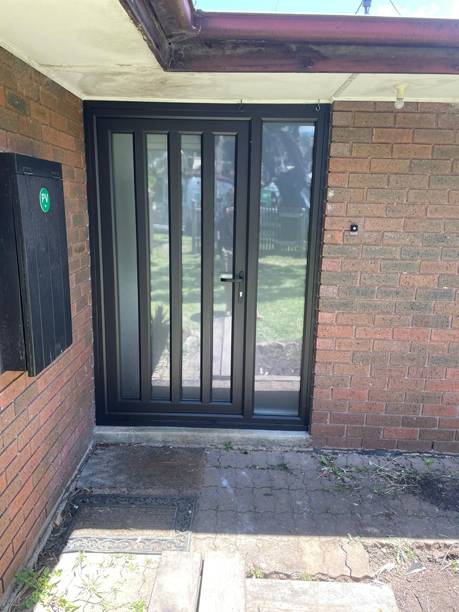
Most homeowners don’t think seriously about security screens until something prompts them — a break-in nearby, a restless summer night where the choice is between stifling heat and leaving a window open, or a growing sense that a standard flyscreen isn’t doing much beyond keeping out the mosquitoes. At that point, the question isn’t really “should I consider security screens?” It’s “are they actually worth it, and which ones?”
This article focuses specifically on Bradnam’s security screens and makes an honest case for why they stand apart from standard screens and many competitors. The reasons go beyond the obvious “they’re harder to kick in” — though that matters too — and extend into the everyday quality-of-life improvements that good security screens deliver without compromise.
For many homeowners, the decision to upgrade security screens sits alongside broader window and ventilation choices. Pairing high-quality fly and security screens with well-designed openings such as awning windows for safe ventilation allows you to maximise airflow without compromising safety. This combination is particularly relevant in Australian conditions, where natural ventilation is a daily priority but needs to be balanced with security and insect protection.
Security screens are also one of those upgrades that need to work with the home’s layout, not just add protection. In smaller houses, townhouses, and apartments, a screen that supports ventilation without making the room feel closed in or visually heavier is often a better investment than one that simply looks robust on paper. That’s especially true where doors and windows already have to do multiple jobs at once — bringing in light, maintaining airflow, and preserving usable floor space. For a broader look at how openings can improve comfort and practicality in tighter floorplans, this guide to making the most of small living spaces with your windows and doors is useful reading.
Before getting into the five reasons, it’s worth understanding the distinction between a security screen and a standard flyscreen, because the gap is much larger than many people realise.
A standard flyscreen is essentially a mesh barrier for insects. It’s lightweight aluminium or fibreglass mesh in a basic frame, and while it keeps bugs out, it offers essentially no resistance to forced entry. A determined intruder can cut through or push through a standard flyscreen in seconds.
A proper security screen is an entirely different category of product. Bradnam’s security screens use stainless steel or heavy-duty aluminium mesh specifically designed to resist forced entry — including the specific attack methods that testing standards require: knife shear, impact, jemmying, and door removal attempts. The frames are engineered for strength, the locking systems are multi-point, and the product is tested to Australian Standards including AS5039 and AS5041, which set out the performance benchmarks a screen must meet to be legitimately classified as security-grade.
This is the context that most competitor content skips — the fact that “security screen” can be applied loosely to products that don’t actually meet the standards that make the term meaningful.
For homeowners renovating older or character properties, it’s also worth considering how security upgrades integrate with the existing architecture. In some cases, heritage considerations can influence what can be installed and how it looks, which is explored in double glazing options for heritage homes in Melbourne, particularly when balancing performance with preserving original features.
The most fundamental reason to invest in Bradnam’s security screens is that the protection is real and independently verified, not just asserted.
The screens are tested against the specific attack methods that characterise real-world break-in attempts: knife shear (cutting through the mesh), impact force (kicking or striking), and jemmying (leveraging the frame). Testing to Australian Standard AS5039 means these aren’t optional or self-certified benchmarks — they’re the recognised national standard for what constitutes a security screen.
The construction that enables this includes the mesh specification itself — stainless steel mesh provides tensile strength that aluminium or fibre mesh simply cannot match — and the frame and fixing system that holds everything together under stress. One of the specific design features Bradnam’s highlights is a construction approach that reduces direct metal-to-metal contact between the mesh and frame, which addresses galvanic corrosion that can weaken conventional security screen construction over time.
The triple locking system — engaging the screen at multiple points along the frame rather than a single central latch — completes the picture. A single-latch lock is a single point of attack. A triple-lock system forces any would-be intruder to overcome three separate engagement points simultaneously, which significantly increases resistance and time required for forced entry.
The practical implication: this is the kind of screen you can actually rely on, not just one that looks the part.
This is the benefit that most security screen content underplays, and it’s arguably the most impactful on daily life.
With a quality security screen in place, the choice between security and airflow effectively disappears. You can leave your doors and windows open through the night during summer without lying awake wondering if an open window is an invitation. You can open the house up for cross-ventilation during the day when nobody’s home. You can let a breeze through a bedroom window and actually sleep well in it.
This is a distinctly Australian concern. The combination of hot summers, high ambient temperatures, and the preference for natural ventilation over air-conditioning-dependent living makes security screens a genuine quality-of-life investment in ways that matter every night from October through March. A home that can breathe safely is a more comfortable home.
The screen needs to be genuinely secure for this benefit to be real, which is why the tested performance discussed in reason one matters so directly here. A screen that looks like a security screen but doesn’t perform under attack doesn’t give you permission to sleep with your doors open.
The standard objection to security products is that they make a home feel like a fortress — visually heavy, enclosed, or uncomfortable. Bradnam’s security screens address this more comprehensively than the traditional alternatives.
Compare the options. Security bars are effective at preventing entry but visually stark, reduce emergency egress capability, and don’t address insects. Roller shutters provide both security and privacy but block light and airflow entirely when deployed. Standard flyscreens offer airflow and insect protection but no meaningful security.
Security screens in the Bradnam’s range — particularly the Stainless View series with its fine stainless steel mesh — maintain good outward visibility while admitting airflow and keeping insects out. The visual footprint is minimal compared with bars or shutters. Light transmission and views are preserved to a degree that contributes positively to how rooms feel.
There’s also the UV and heat reduction benefit that applies particularly in Australian conditions. Quality security screens with appropriate mesh density reduce solar heat gain through glazed openings, which contributes to keeping rooms cooler and reducing cooling loads. This isn’t the primary reason to install them, but it’s a genuine bonus that adds to the value calculation.
This point matters considerably more in Australia than generic security screen content typically acknowledges.
Coastal environments are the most demanding context: salt air accelerates corrosion in metals that aren’t specified for marine conditions. Frames, mesh, hinges, and locking hardware all need to be appropriate for the exposure level. Bradnam’s screens are designed with Australian conditions in mind, including the construction approach that reduces galvanic corrosion by minimising direct contact between dissimilar metals — a detail that directly addresses a common failure mode in coastal screen installations.
Australian UV intensity is also worth considering. Products not rated for Australian solar conditions can degrade faster than their specifications suggest when exposed to the combination of UV intensity and ambient heat that characterises most of the continent. This affects both the frame finish and the mesh specification.
For properties in designated bushfire-prone areas, the additional consideration of Bushfire Attack Level (BAL) ratings applies to building products including screens. If your property sits within a bushfire overlay, confirming the product’s BAL compliance is relevant to both regulatory compliance and practical protection.
Beyond coastal and bushfire contexts, the general durability of Bradnam’s screens in normal Australian suburban and regional conditions is a practical consideration. A product that needs replacing or significant servicing within five years isn’t offering the value that the upfront investment suggests.
The framing that makes most sense for security screen investment is not the upfront cost in isolation — it’s the total value delivered over the product’s lifespan.
Well-specified, properly installed Bradnam’s security screens have a service life measured in decades. The stainless steel mesh doesn’t rust or degrade in the same way that cheaper mesh materials can. The frame and hardware, properly specified for the installation environment, maintain their operation and appearance over extended periods with basic maintenance.
The cost comparison against the alternative approaches over the same period is instructive. Standard flyscreens that need replacing every few years accumulate cost without accumulating capability. Alarm systems add ongoing subscription costs and address detection and response rather than prevention. Security screens are primarily a prevention measure — they make successful forced entry significantly harder, which is the most effective point in the security chain to intervene.
There’s also the property value dimension. Quality security products are increasingly a positive factor in property appraisal, particularly in urban and suburban markets where home security is a purchasing consideration for buyers. This is difficult to quantify precisely, but it’s real.
Understanding where security screens sit relative to other approaches helps frame the investment decision clearly.
Standard flyscreens provide insect protection and no meaningful security. They’re appropriate for locations where security isn’t a concern, but they’re not a security product.
Security bars provide strong forced-entry resistance but restrict emergency egress, look visually heavy, don’t address insects, and can reduce natural light. They’re a reasonable choice in very high-risk properties but involve significant practical trade-offs in everyday living.
Roller shutters provide security and privacy but block light and airflow when deployed. They suit specific use cases — long absences, overnight security in high-risk areas — but aren’t practical as an all-day solution.
Smart security systems (alarms, cameras, monitoring) are response and deterrence tools rather than prevention tools. They complement physical barriers well; they don’t substitute for them. A home with good physical security and an alarm system is considerably better protected than a home relying on either alone.
Bradnam’s security screens occupy the practical middle ground: genuine forced-entry resistance combined with everyday usability, good aesthetics, and no meaningful compromise on light, airflow, or emergency egress.
Not all products marketed as “security screens” meet the standards that justify the name. Before purchasing any security screen product, verify the following.
Does the product comply with Australian Standards AS5039 (security screen doors) and AS5041 (security screen windows)? Ask for documentation, not just assurances. Compliant products can demonstrate this.
What is the mesh specification? Stainless steel mesh provides the highest tensile resistance. Aluminium mesh can be security-grade but is generally less strong than stainless steel. Generic mesh without a rated specification may not perform as claimed.
Is the lock system included in the tested and rated specification? A strong mesh in a frame with a weak locking system doesn’t deliver the overall security the mesh suggests.
Is installation being done by experienced, qualified installers? A quality screen poorly installed — without correct fixing into the frame, without proper alignment, without appropriate sealing — won’t perform to its rated specification.
Security screens in the Bradnam’s range represent a considered investment that delivers on multiple dimensions simultaneously: genuine forced-entry resistance verified against Australian Standards, the freedom to ventilate your home safely, minimal visual impact on how the home looks and feels, construction appropriate for Australian climate conditions including coastal environments, and long-term durability that justifies the upfront cost.
The five reasons outlined here aren’t about selling the idea of security screens generically — they’re about why well-specified, properly tested, quality-installed screens are worth the investment over the cheaper alternatives that look similar but don’t perform the same way.
Quality security screens like those in the Bradnam’s range are both. They provide genuine physical resistance to forced entry when tested to Australian Standards AS5039 and AS5041, which assess performance against knife shear, impact, jemmying, and removal attempts. They’re not just deterrents — they’re structural barriers that significantly increase the effort required to force entry.
A standard flyscreen uses lightweight mesh designed to keep insects out and offers no meaningful resistance to forced entry. A security screen uses heavy-duty stainless steel or aluminium mesh with an engineered frame and multi-point locking system, tested and rated against specific attack methods. The performance gap between the two is very large.
Standard flyscreens can be cut or pushed through easily. Quality security screens using stainless steel mesh are designed specifically to resist cutting — the mesh tensile strength is one of the metrics assessed in AS5039 testing. No screen is indestructible, but a properly specified and installed security screen makes forced entry through the screen significantly harder and slower, which is a highly effective deterrent.
Yes. Bradnam’s security screens are designed and tested to AS5039 and AS5041, which are the relevant Australian Standards for security screen doors and windows. These standards set out specific forced-entry resistance tests that a compliant product must pass.
A well-specified and properly installed security screen in a standard residential environment should last many years — typically decades with basic maintenance. Stainless steel mesh is resistant to corrosion in normal conditions. In coastal environments, appropriate hardware and frame specification for marine conditions is important and extends service life in salt-air exposure.
The stainless steel mesh in quality security screens is highly corrosion-resistant. Bradnam’s screens use construction methods designed to reduce galvanic corrosion — the process where dissimilar metals in contact corrode more rapidly. In coastal environments, confirming that all hardware and frame components are appropriately specified for marine-grade conditions is important.
No. Quality security screens like the Stainless View series maintain good airflow and outward visibility while preventing insect and unauthorised entry. The visual impact is minimal compared with bars or shutters. Light transmission and natural ventilation are both well preserved.
Yes, for most of the same reasons they’re worth it anywhere. The security benefit is relevant at any crime level, but the airflow and lifestyle benefits — being able to leave doors and windows open safely — are equally valuable regardless of local crime statistics. The investment is as much about daily comfort as it is about break-in prevention.