
November ONLY: 35% OFF
APS IS OFFERING 35% OFF ALL ITEMS GET YOUR QUOTE NOW
APS IS OFFERING 35% OFF ALL ITEMS GET YOUR QUOTE NOW

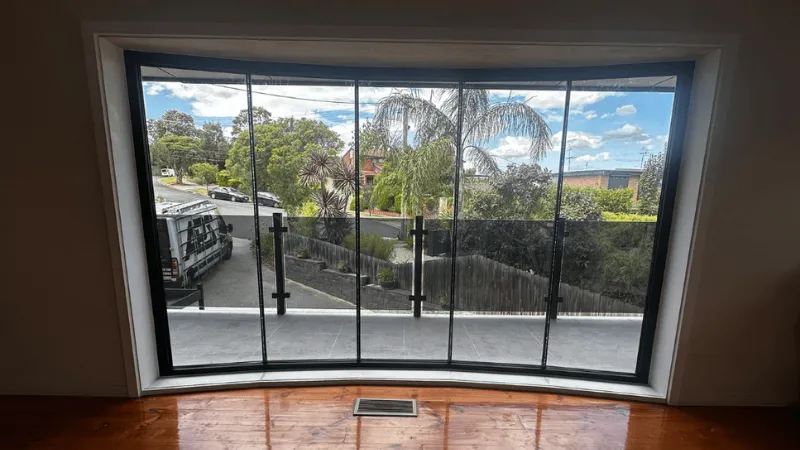
Choosing a patio door is one of those decisions that feels straightforward until you’re actually making it. Then the questions multiply: sliding or bifold? How wide does the opening actually need to be? What glass handles the western sun without turning the living room into a greenhouse? What’s the difference between all these glazing options, and which ones are worth paying more for?
The stakes are real. A well-chosen patio door improves how the house functions and feels every day — easier access to the outdoor space, better natural light, more comfortable temperatures, and a connection between inside and outside that makes both feel more generous. A poorly chosen one creates problems that are expensive to fix: inadequate ventilation, uncomfortable heat gain, screens that don’t integrate properly, tracks that need constant attention, or a door that simply doesn’t open as wide as the space needs.
This guide cuts through the categories to help you make a confident, well-informed decision based on how you actually use the space, what your site conditions are, and what you’re genuinely willing to spend.
For most Australian homes, the choice usually comes down to whether you want the everyday practicality of sliding patio doors or the wider opening created by stacker sliding doors. Thinking about that difference early helps you match the door style to how the patio is actually used — whether that’s quick daily access to the backyard, better airflow through the living area, or a wider opening for entertaining.
Security screens also become more valuable in smaller homes, where a single door or window often has to do several jobs at once — bring in light, allow airflow, provide everyday access, and still leave the room feeling open rather than cramped. In that context, the screen isn’t just about protection; it’s part of how the whole space functions. If you’re weighing security upgrades in a townhouse, apartment, or compact house, it also helps to think about how your windows and doors affect layout, circulation, and perceived space overall. This guide to making the most of small living spaces with your windows and doors is useful for understanding how better-chosen openings can improve both comfort and practicality in tighter floorplans.
Before comparing door styles, answer these questions about your specific situation. The answers will narrow your choices considerably.
How wide is the opening, and how much of it do you want usable when the door is open? A standard two-panel slider opens half its width. A stacker system can open considerably more. A bifold opens almost all of it.
Which direction does the opening face? A north or west-facing patio in most parts of Australia receives intense afternoon sun. This affects glazing specification more than almost anything else.
How frequently will the door be used, and in what way? A door that’s opened and closed thirty times a day over summer needs different hardware to one that’s occasionally folded fully open for entertaining.
What are the site exposure conditions? Coastal? Exposed to wind? Humid? These affect frame material, hardware, and finish choices.
What’s your realistic budget, and how much do you value long-term performance over upfront cost? Quality hardware and glazing almost always pay back their cost differential over a five-to-ten-year horizon.
Sliding glass doors are the most practical choice for the widest range of Australian patio applications. They operate simply, require no swing clearance, suit high-frequency daily use, and work well with standard insect and security screen configurations.
Standard two-panel sliders open approximately half their total width — one panel sits fixed while the other slides behind it. This is a common and underappreciated limitation. For a 2.4-metre opening, you get approximately 1.2 metres of usable aperture when open.
Stacker sliding systems — three or more panels that stack behind each other when opened — solve the opening-width problem. A three-panel stacker can open two-thirds of the total span; four-panel systems can open more. For the kitchen-to-alfresco connection used by a family entertaining regularly, a stacker system that clears most of the wall is worth the additional cost over a two-panel slider.
Sliding doors in general are better for everyday use than bifolds. The operation is simpler, there’s less hardware to maintain, they integrate with standard screen systems more naturally, and the rollers and tracks hold up better under frequent use with children and pets.
Bifold patio doors fold concertina-style and stack to one or both sides, allowing the opening to be cleared almost completely. When fully open, the effect is genuinely impressive — the wall seems to disappear, and inside and outside become a single space.
This is bifolds’ compelling selling point and it’s real. For a dedicated entertaining area where the full-open effect will be used regularly and valued, bifolds deliver something sliders can’t match.
The honest trade-off: more hardware means more maintenance and more potential failure points. Hinges, multiple panel pivot points, and top and bottom tracks all need periodic inspection and lubrication. In coastal environments where salt air accelerates hardware deterioration, the maintenance burden is more significant. Bifolds also need stacking space — the folded panels require a clear section of wall to land against, which constrains cabinetry and furniture placement on both sides of the opening.
For a family home where the door is operated daily as a primary access point between kitchen and alfresco, bifolds earn their premium only if the full-open effect is regularly used. If it’s used twice a year for a birthday party, a quality stacker slider is probably the more rational choice.
Hinged glass patio doors — including traditional French door pairs — suit smaller openings, heritage-style homes, and applications where the door is used occasionally rather than as a primary outdoor access point. Bedroom access to a private courtyard, a side door to a garden, or a second exit from a study to a deck are all appropriate applications.
French doors swing into or out of the space, which requires clearance that might not be available adjacent to furniture or outdoor paving. For the main living-to-outdoor connection in a contemporary home, they’re usually outperformed by sliding or stacking systems on both opening width and daily usability. But in the right context — a character renovation, a small covered patio, or a space where the aesthetic matters as much as the function — they’re a perfectly appropriate choice.
Powder-coated aluminium is the dominant choice for patio glass doors in Australian residential construction, and for most applications it’s the right one. It’s dimensionally stable (doesn’t warp, swell, or crack), available in slim profiles that maximise glass area, holds its finish well in most conditions, and is available across a wide price range.
The one condition where standard aluminium specification fails is coastal exposure. Salt air corrodes hardware, tracks, and frame finishes faster than most homeowners expect. For homes within two kilometres of the coast, marine-grade hardware and appropriate corrosion-resistant coating specification is not optional — it’s necessary. Confirm this explicitly with your supplier; don’t assume it.
Timber patio doors are appropriate in some contexts — heritage homes, rural properties where the natural material language is part of the design — but they carry a maintenance commitment that most buyers underestimate. Regular re-coating, attention to moisture ingress, and checking for movement are ongoing requirements. Timber can look exceptional and age beautifully with care; it deteriorates visibly without it.
Thermally broken aluminium — where the inner and outer sections of the frame are separated by a non-conductive barrier — provides meaningfully better thermal performance than standard aluminium and is worth specifying for any patio door in southern Australia where winter comfort is a genuine consideration.
It’s also worth factoring in how the timing of your door installation fits within the broader renovation process, particularly if structural changes or glazing upgrades are involved. Planning ahead can avoid delays and rework, which is covered in more detail in how to schedule a double glazing renovation effectively, especially when coordinating trades and lead times.
This is where most patio door advice stays too superficial. The glass choice affects thermal comfort, privacy, safety, acoustics, and UV protection. Getting it right matters.
Australian building standards require toughened or laminated safety glass in external door applications. This is not a premium upgrade — it’s a baseline compliance requirement. Toughened glass shatters into small rounded fragments rather than sharp shards if broken. Laminated glass has a plastic interlayer that holds broken panes in place, providing better security and acoustic performance. Confirm with your supplier which applies to your specific installation.
Double glazing creates a sealed unit with an insulating gas-filled cavity between two glass panes. It significantly reduces heat transfer compared with single glazing, which matters for maintaining comfortable indoor temperatures on both hot and cold days.
For patios connecting to living rooms, main bedrooms, or any room where thermal comfort is a daily consideration, double glazing is worth the investment in most Australian climates. In northern Australia with its mild winters, the benefit is primarily summer heat reduction; in southern Australia, the benefit extends to winter warmth retention as well.
Not all double glazing performs equally. Low-E coating — a thin metallic layer that reflects infrared radiation while admitting visible light — is standard in quality double-glazed units and materially improves performance over standard double glazing without it.
This is the most important glazing consideration for patio doors facing north or west in Australian climates. Solar control glass with a low Solar Heat Gain Coefficient (SHGC) reduces how much solar energy passes through the glass, directly reducing the cooling load on adjacent rooms during summer afternoon sun.
A west-facing living room with a large sliding glass patio door and no solar control glazing can become genuinely uncomfortable on summer afternoons regardless of how effective the air conditioning is. This is one of the most preventable problems in patio door selection and one of the most frequently ignored during specification.
Solar control glass doesn’t eliminate the view or significantly reduce light levels, but it materially reduces heat admission. On any north or west-facing patio opening, specify the appropriate SHGC for the climate zone.
Where security is a priority — ground-floor openings in suburban or urban locations — laminated glass provides a meaningful advantage over standard toughened glass. If broken, laminated glass stays largely in place rather than falling away, significantly slowing access through the opening. For homes where the patio door is an obvious potential entry point, specifying laminated glass in the door leaf and any fixed panels is worth considering.
Frosted, obscured, fluted, or tinted glass options address privacy for patio doors that face close neighbours, footpaths, or other areas where visibility into the home is a concern. These options allow light to pass while reducing the visibility of the interior. Fluted glass has become increasingly popular for privacy applications because it also adds visual texture and character to the door.
This is where generic patio door advice fails Australian buyers most significantly.
Orientation matters more than most buyers realise. A patio door on the north or west elevation of an Australian home with standard clear glazing and no external shading creates a significant solar heat gain problem in summer. The combination of appropriate solar control glazing and external shading — an eave, pergola, or adjustable blind — addresses this better than either alone. External shading is often more cost-effective than premium glazing specification alone.
Insects are a genuine daily concern in most Australian climates. Insect screen solutions should be planned as part of the door specification from the start, not added afterwards. Retractable screen systems integrate well with sliding and stacker configurations. Bifold configurations require more purpose-designed screen solutions that are generally more expensive and complex. For any patio door that will be operated in warm weather, confirm the screen solution with your supplier before ordering the door.
Summer ventilation strategy matters for how the door is used. A sliding door operated on a warm evening for cross-ventilation behaves differently from one that’s opened fully for entertaining. The opening orientation, the screen solution, and the door’s configuration all affect how effectively it contributes to natural ventilation.
Bushfire-prone areas have specific glazing and frame requirements based on the site’s Bushfire Attack Level (BAL) rating. If your property is in a designated bushfire-prone area, confirm the required specification with your supplier and verify compliance before purchasing.
Multi-point locking — hardware that engages at multiple points along the door height rather than at a single central latch — is standard in quality sliding and stacking door systems and provides meaningfully better security than basic single-point hardware. Confirm this is included in any door you’re comparing rather than assuming.
Anti-lift devices in the track prevent the sliding panel from being lifted out of its track, which is a vulnerability in some older or lower-quality systems. This should be standard; verify it.
For households with young children, threshold design and the operation of door locks are worth reviewing. Heavy glass panels in large stacker systems can be difficult for children to stop if moving; soft-close mechanisms on quality systems address this.
The door product and its installation quality are both essential to long-term performance. A well-specified door poorly installed will fail to operate smoothly, may not seal correctly, and can develop weather performance problems that are difficult to diagnose and fix after the fact.
Threshold and drainage design is particularly important. The transition between the internal floor and the external slab must accommodate drainage — water standing against a patio door threshold creates long-term problems with seals and weather performance. The threshold design should provide for positive drainage away from the opening.
Track and roller quality in sliding systems determines whether the door operates smoothly for ten years or starts to feel stiff and difficult within five. Heavy glass panels in stacker systems place significant demands on rollers; specifying quality hardware appropriate to the panel weight is not a premium upgrade — it’s basic product matching.
Frame square and alignment affects how well the door seals and how smoothly it operates. Doors installed into out-of-square openings, or where the frame has not been installed correctly, develop alignment problems over time that are expensive to rectify.
Assuming bigger glass always means better performance. A large west-facing sliding door without solar control glazing creates a thermal problem regardless of how good the frame is.
Treating insect screening as an afterthought. Plan the screen solution alongside the door, not after it.
Comparing door quotes without comparing specifications. Two seemingly similar stacker systems at different prices can differ significantly in glazing performance, hardware quality, thermal break specification, and warranty.
Choosing bifolds because they seem more premium without considering whether the full-open effect will actually be used regularly enough to justify the additional cost and maintenance.
Ignoring coastal hardware specification for homes near the ocean. Marine-grade hardware on coastal properties is not a luxury; it’s a practical necessity for maintaining smooth operation and avoiding premature corrosion.
Selecting the right external glass patio door comes down to five interlocking decisions: door type matched to how the space is used, frame material matched to site conditions, glazing matched to orientation and climate, screen solution planned alongside the door, and installation quality that delivers long-term performance.
For most Australian homes, a quality stacker sliding system in thermally broken aluminium with double glazing, appropriate solar control glass for the orientation, an integrated screen solution, and multi-point security locking provides the best combination of everyday practicality, thermal comfort, security, and long-term durability.
Bifolds are worth their premium when the full-open entertaining effect is genuinely valued and used regularly. For daily-use connections between living areas and outdoor spaces, sliders are usually the more practical and durable choice.
For most Australian homes, a stacker sliding system offers the best combination of practical opening width, daily usability, screen compatibility, and long-term reliability. Bifolds suit dedicated entertaining areas where the full-open effect is regularly used. Hinged or French-style doors suit smaller openings and specific architectural contexts.
Sliding doors are better for daily-use family applications — simpler operation, lower maintenance, better screen integration, more reliable in high-frequency use. Bifolds are better when a wide unobstructed opening is a primary design goal and the full-open configuration will actually be used regularly.
Yes, for most applications. Double glazing with a low-E coating reduces heat transfer in both directions, improving thermal comfort in adjacent rooms year-round. For patios opening to main living areas, it’s a worthwhile investment in most Australian climates.
Solar control glass with an appropriate Solar Heat Gain Coefficient (SHGC) is the most effective specification for managing heat admission through patio doors on north and west-facing orientations. Combined with external shading, it provides the most effective approach to summer heat management.
Yes, with marine-grade hardware and appropriate coating specification. Standard aluminium hardware corrodes faster than expected in salt-air environments. Confirm marine-grade specification with your supplier explicitly — don’t assume it’s included.
Bifold systems clear almost the entire opening width when fully open. Multi-panel stacker systems clear the majority of the opening depending on panel count. Standard two-panel sliders open approximately half their total width.
Yes. Plan the screen solution alongside the door specification, not afterwards. Retractable screens integrate well with sliding and stacker systems. Bifold configurations require purpose-designed screen solutions that are generally more complex and expensive.
The most common: specifying clear glazing on north or west-facing openings without solar control; treating screening as an afterthought; comparing quotes without matching specifications; choosing bifolds without considering daily operational demands and maintenance; and failing to specify marine-grade hardware for coastal locations.