

Key Takeaways
Four Core Functions: Every window evaluation balances natural daylighting, controlled cross-ventilation, thermal envelope insulation, and perimeter home security.
Styles & Operational Mechanics: Window selection dictates room airflow. Side-hinged casements catch cross-breezes; top-hinged awnings provide rain-safe ventilation; sliding systems suit wide spans; fixed sashes maximize visual light transmission.
Framing Material Science: Multi-chambered uPVC delivers optimal thermal efficiency for Australian residential builds, outperforming standard raw aluminum and avoiding the heavy maintenance cycles required by timber.
| APS KÖMMERLING uPVC WINDOW SYSTEM SPECIFICATIONS | |
|---|---|
| Framing Profile System | German-engineered Kömmerling 70mm multi-chambered uPVC |
| Thermal Performance (WERS) | U-values down to 1.3 W/m²K (7-Star NCC Compliant) |
| Acoustic Isolation | Up to Rw 40 sound attenuation rating |
| Standards Compliance | AS 2047 (Windows/Doors) & AS 1288 (Glass) Certified |
Selecting new windows frequently presents homeowners with confusing technical terminology—casements, awnings, thermally broken profiles, Low-E coatings, and uPVC. Understanding how different window styles, framing materials, and glass specifications interact simplifies the decision-making process.
Evaluating window performance relies on matching functional design to specific room layouts and local climate conditions across Melbourne and Victoria.
To review specific window opening styles in detail, explore our dedicated guides to double glazed casement windows and double glazed awning windows for technical specifications on sash limits and hardware setups.
The Four Fundamental Window Functions
A window serves four essential operational functions within the residential building envelope:
Natural Light Transmission: Governs daylight quality and room brightness based on window orientation, frame sightlines, and glass area.
Ventilation & Air Movement: Controls natural breeze capture and indoor air turnover depending on opening sash configurations.
Thermal Insulation: Seals the building envelope to block unwanted summer solar heat gain and prevent conductive winter interior heat loss.
Perimeter Security: Protects occupants through multi-point locking gear, heavy-duty frame inserts, and toughened safety glass.
Residential Window Configurations Compared
Sliding Windows
Horizontal sliding windows utilize two or more sashes running on parallel tracks. They suit contemporary living zones and tight exterior pathways where swinging sashes would create obstructions. Maximum open ventilation clearance equals roughly 50% of total frame width.
Awning Windows
Top-hinged awning windows push outward from the bottom edge via chain winders. Their outward-sloped glass panel sheds rainwater away from the opening, providing rain-safe ventilation for bathrooms, laundries, and kitchens during variable weather.
Casement Windows
Side-hinged casement windows swing outward like doors, opening 100% of the frame area to capture prevailing breezes and scoop moving air directly into interior living spaces.
Tilt and Turn Systems
Versatile tilt and turn windows incorporate dual-action European hardware. Tilting the sash inward from the top delivers secure background ventilation, while swinging it inward fully allows easy interior cleaning of the outer glass surface.
Fixed Windows
Non-opening fixed windows feature non-operable sashes, providing maximum structural glass area, clear views, and optimal airtightness at lower unit costs. They are ideal for high-wall voids or combined alongside operable sashes.
Framing Material Science: uPVC vs. Aluminum vs. Timber
Framing materials govern long-term thermal conduction, weather resistance, and maintenance cycles:
German uPVC Profile Technology
Unplasticised polyvinyl chloride (uPVC) is a natural thermal insulator with low conductivity. APS utilizes German-engineered Kömmerling 70mm multi-chambered uPVC profiles reinforced with internal steel channels. Multi-chambered internal air pockets prevent thermal transfer through the frame, eliminating condensation and frame cold-bridging.
Formulated with tropical-grade titanium dioxide (TiO₂), uPVC resists harsh Australian UV exposure, salt air corrosion, and frame warp—requiring zero painting or sealing over its extended service life.
Aluminum Framing
Standard aluminum is strong and lightweight but exhibits high thermal conductivity, readily transferring exterior cold and heat into the home. Thermally broken aluminum incorporates a plastic insulating strip between inner and outer profile sections to improve thermal ratings, though at a significantly higher cost than uPVC.
Timber Framing
Timber offers natural thermal resistance and traditional aesthetics for heritage homes. However, timber requires ongoing sealing, painting, and maintenance to prevent rot, swelling, and termite damage in Australian climates.
Glass Specifications & Thermal Performance
Technical Performance Metric: APS pairs Kömmerling 70mm uPVC frames with argon gas-filled Low-E double glazing, achieving ultra-low U-values down to 1.3 W/m²K and acoustic reduction up to Rw 40. This ensures complete compliance with AS 2047, AS 1288, and mandatory 7-star NCC energy standards across Victoria.
Glazing units handle the majority of thermal insulation across the window opening:
Single Glazing: A single pane of glass that provides minimal resistance to conductive heat loss in winter or solar heat gain in summer.
Double Glazing: Two glass panes separated by a sealed, argon gas-filled cavity that forms an insulating barrier, slowing conductive thermal transfer.
Low-Emissivity (Low-E) Coatings: Microscopic metal coatings applied to glass surfaces that reflect radiant heat back to its source—keeping interiors warmer in winter and cooler in summer.
Upgrading aging single-pane joinery through full window replacement restores airtight thermal insulation, acoustic comfort, and security.
Practical Framework for Choosing Windows
Follow this step-by-step framework to specify windows effectively for your project:
Identify Primary Function: Determine whether each opening prioritizes light transmission, continuous ventilation, or passive cooling airflow.
Assess Room Exposure & Orientation: Match glazing specifications to solar orientation (e.g., solar control Low-E glass on west facades, expansive double glazing on north elevations).
Select Frame Material: Choose high-performance double glazed windows utilizing uPVC profiles to maximize thermal insulation and eliminate painting maintenance.
Verify Building Code Compliance: Confirm window products meet local Bushfire Attack Level (BAL) requirements and satisfy Australian Standards AS 2047 and AS 1288.
Ready to select the ideal double glazed windows for your home?
Book a free measure & quote with the APS team today or call our Melbourne specialists to discuss custom window styles and high-performance glazing options.
Frequently Asked Questions (FAQs)
1. What are the most common types of residential window opening styles?
The primary residential window styles are sliding, awning, casement, tilt and turn, and non-operable fixed windows. Each configuration offers distinct advantages for ventilation volume, weather resistance, and spatial clearance.
2. Which window opening style delivers maximum ventilation?
Side-hinged casement windows provide maximum ventilation volume. Opening the sash clears 100% of the frame width, allowing the glass leaf to catch parallel cross-breezes and direct moving air into living areas.
3. Are uPVC window frames more thermally efficient than aluminum?
Yes. uPVC is a natural thermal insulator with low conductivity. Standard aluminum readily transfers heat and cold through the frame unless equipped with expensive thermal breaks. Kömmerling multi-chambered uPVC delivers superior insulation at a more accessible price point.
4. How does double glazing reduce household power bills?
Double glazed insulating glass units (IGUs) create an airtight thermal barrier that drastically reduces conductive heat loss in winter and solar heat gain in summer, lowering heating and cooling HVAC energy demands.
5. What standards do APS uPVC windows satisfy across Victoria?
All APS double glazed window systems comply fully with Australian Standards AS 2047 (window performance and testing) and AS 1288 (glass selection and safety), meeting 7-star NCC energy efficiency mandates.
6. Are uPVC windows suitable for coastal properties across Victoria?
Yes. Kömmerling uPVC profiles are completely impervious to coastal salt spray, airborne moisture, and UV exposure, preventing the pitting corrosion and oxidation common with metal frames.
7. What is Low-E glass and how does it work?
Low-Emissivity (Low-E) glass features a microscopic, transparent metallic coating that reflects radiant heat back to its source—retaining interior warmth during winter and blocking radiant solar heat during summer.
8. Can I combine fixed and operable windows in the same opening frame?
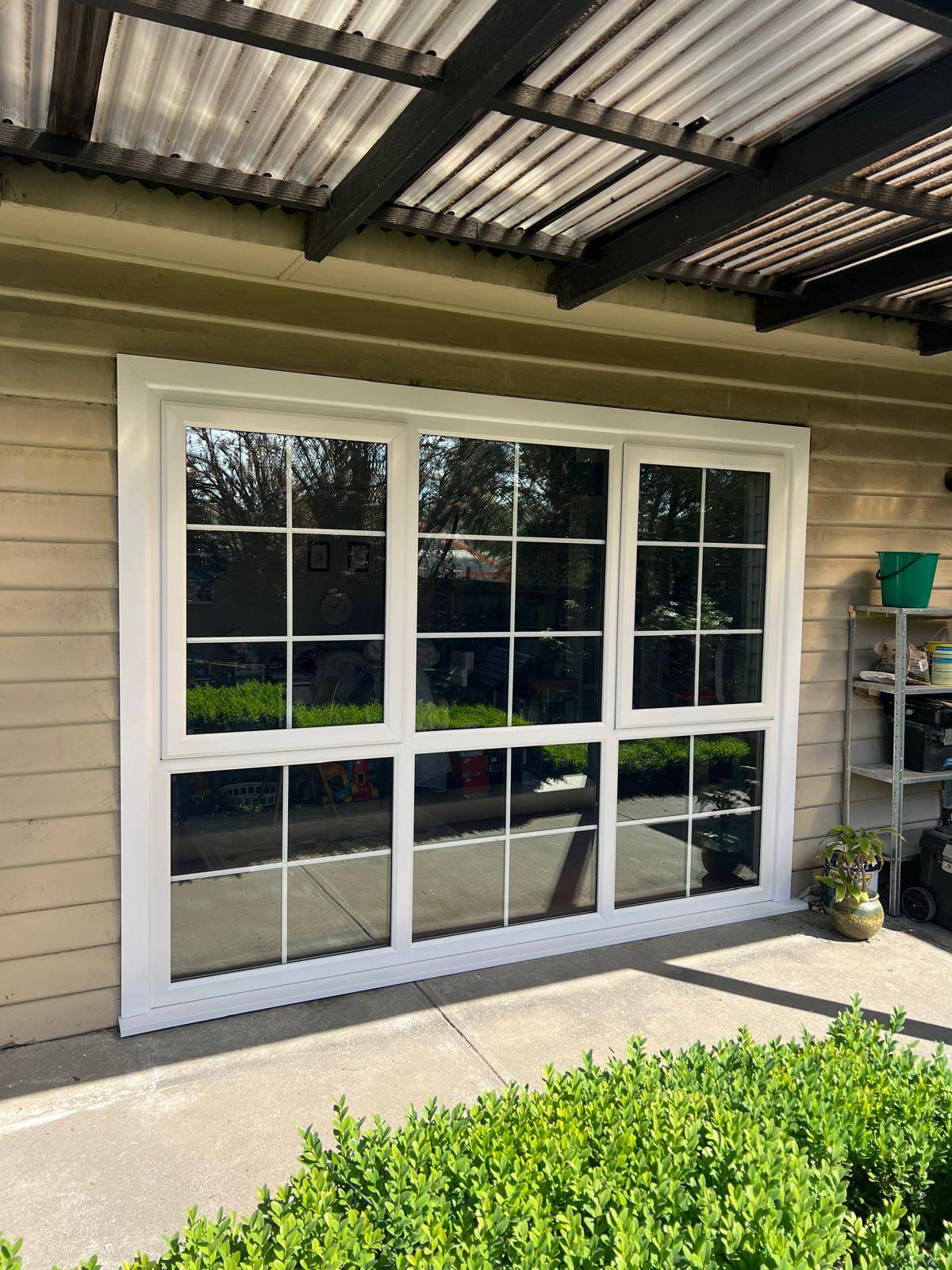
Yes. Combining a large central fixed window with flanking awning or casement openers maximizes daylight transmission while providing controlled natural ventilation.
9. Why is professional installation critical for window performance?
Even premium double glazed windows underperform if installed poorly. Professional installation ensures frames are square, flashings prevent water ingress, and perimeter gaps are insulated and sealed compliant with AS 2047.
10. What framing options best suit bushfire-prone (BAL) sites?
Properties located in designated Bushfire Attack Level (BAL) zones require certified toughened safety glass, specialty seals, and flame-resistant framing systems compliant with AS 3959 building standards.
Disclaimer: This architectural guide provides general educational information regarding window selection, framing materials, and glazing specifications across Victoria. Specific product performance depends on building orientation, window dimensions, and professional installation. Contact APS Double Glazing for an accurate on-site consultation.