November ONLY: 35% OFF
APS IS OFFERING 35% OFF ALL ITEMS GET YOUR QUOTE NOW
APS IS OFFERING 35% OFF ALL ITEMS GET YOUR QUOTE NOW

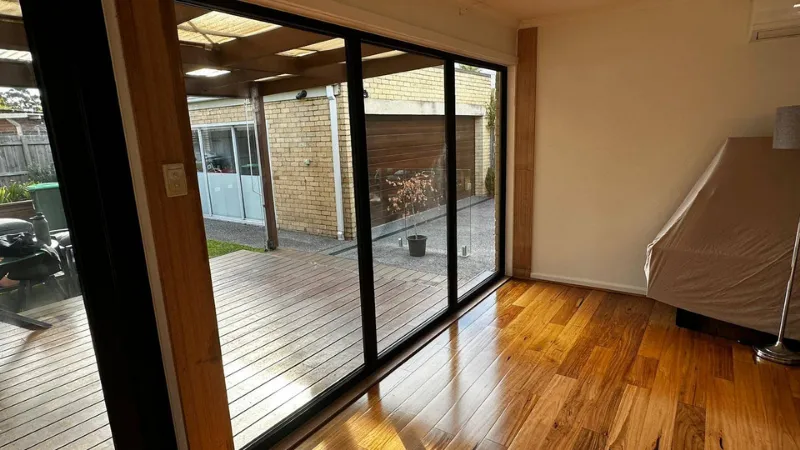
What sliding doors cost to install in Australia varies widely, because the projects vary widely. Replacing a standard internal door is a different job from fitting a four-panel stacking system between a living area and an alfresco. Both are sliding door installations, but door size, materials and installation complexity differ completely.
This guide breaks down installation costs by project type and cost driver, with realistic examples so you can see where your project is likely to land.
If you’re still deciding between door types before thinking about cost, our guides to double glazed sliding patio doors and double glazed stacker doors explain how each system works and where each performs best — useful reading before committing to a configuration, since the door type you choose is the single biggest driver of the total project cost.
For a like-for-like external patio sliding door replacement in a standard residential application — removing the old door and frame and installing a new two-panel aluminium sliding door with standard double glazing — the total installed cost typically ranges from $1,500 to $3,500 for most configurations.
For a quality two-panel external sliding door with double glazing, thermally broken aluminium frames, and professional installation in a standard opening, budget $2,000 to $3,500 as a realistic mid-range expectation.
A premium specification — larger format, stacking system, higher-performance glazing, custom colour, high quality materials throughout — runs $3,500 to $8,000 or more. The higher upfront cost is usually offset by better performance and a longer service life.
Internal sliding doors are a different market. They cost more than standard internal doors on hinges, but they save space where a swinging door would get in the way. A basic internal cavity slider in a standard doorway opening can be installed for $600 to $1,500. Barn-style internal sliders on a track system range from $400 to $1,200, depending on panel size and hardware quality.
These are the total installed costs, including supply, labour, and standard hardware. They don’t include structural modifications, which are discussed separately below.
It’s also worth noting that installation quality directly affects how well the door performs over time, particularly in weather sealing, insulation, and smooth operation. This article on the importance of professional installation for double glazed windows and doors explains why even a high-quality product can underperform if it’s not installed correctly.
Understanding the components of the total cost helps you assess quotes and identify where specifications differ.
The door itself — frame, each door panel’s glass, and hardware — typically accounts for 50 to 65% of the total installed cost. For a standard two-panel external aluminium sliding door:
Budget specification (standard aluminium, single glazing or basic double glazing): $600 to $1,000 supply only.
Mid-range specification (thermally broken aluminium, quality double glazing with low-emissivity (low-e) coating): $1,200 to $2,000 supply only.
Premium specification (slim-profile thermally broken aluminium, solar-control glazing, multi-point locking, custom colour): $2,000 to $5,000, supply-only, depending on size and configuration.
Installation labour for a standard external sliding door replacement in an existing opening typically costs $400 to $800 for a competent tradesperson or installation team. This covers the removal of the existing door, installation of the new frame, fitting the panels, sealing, and basic finishing.
More complex installations — larger or heavier panels, access constraints, non-standard opening conditions — can push labour to $800 to $1,500.
For internal sliding doors in existing openings, labour is typically $200 to $500.
This is the category most homeowners underestimate when comparing initial quotes.
The following breaks down typical total installed costs by the most common sliding door configurations.
The most common configuration for a living area or bedroom patio connection. Typical total installed cost: $1,500 to $3,500 for a mid-range specification in a standard opening.
Depending on the project requirements, uPVC sliding doors may also be considered alongside aluminium systems, with the overall cost influenced by size, glazing and hardware specification.
Double glazed stacker doors can use three, four, or more panels on a stacking track, allowing a greater proportion of the total span to open than with a standard two-panel slider. These systems are used where maximum opening width is the goal — living rooms, alfresco connections, wider openings.
Supply cost increases significantly with panel count and size. A quality four-panel stacking system in thermally broken aluminium with double glazing can cost $3,000 to $6,000, supply-only. Total installed cost for a premium four-panel stacking system in a standard opening: $4,000 to $8,000.
Where a wide indoor-outdoor opening is the main design objective, double glazed bifold doors may also be considered as an alternative configuration, with panels that fold and stack rather than slide along the opening.
A panel that slides into a cavity within the wall, completely hiding when open. The cavity must be built into the wall — retrofitting a cavity slider is more involved than surface-mounted configurations.
For a new build or renovation where the cavity is purpose-built, the door cost is $400 to $1,500, supply and installation into a purpose-built cavity: $300 to $600. If the cavity needs to be created in an existing wall, this adds significant framing and carpentry work.
A panel that slides on an exposed overhead track, surface-mounted to the wall. These are the most cost-effective and straightforward internal sliding door options.
Total installed cost for a quality barn-style internal door on an existing wall: $600 to $1,800, depending on panel size and hardware quality.
In any door configuration, material and glazing choices are the primary levers that drive price. Here’s how each one affects the total.
The overall cost of double glazed doors can vary considerably depending on frame material, glass specification, opening size and hardware choices.
Standard powder-coated aluminium is the most affordable external door frame material in Australia. Within this category, the glazing specification is a bigger cost driver than the frame material itself. uPVC frames offer better thermal performance than standard aluminium without the thermal-break premium. Timber sliding doors, with timber frames, usually sit at the top of the price range and need regular maintenance.
Thermally broken aluminium costs $300 to $700 more than standard aluminium for a typical door configuration, and the improved thermal performance can be meaningful where local climate and exposure warrant it. For projects involving double glazing in Geelong, factors such as the property’s orientation, exposure and proximity to the coast can also inform the appropriate frame, glazing and hardware specification. This may make the additional investment worthwhile for main living area connections, depending on the project.
Double glazing with a low-e coating adds $200 to $500 to the cost of standard single glazing for a typical patio door. Energy efficient glass like this improves energy efficiency and cuts outside noise, so it’s generally good value, particularly with large glass panels that bring in natural light but also lose the most heat.
Solar control glazing (low Solar Heat Gain Coefficient (SHGC)) or tinted glass for west-facing doors adds a similar premium to low-e glazing. It is particularly worthwhile in homes with significant afternoon sun exposure.
Acoustic laminated glass for noise-sensitive locations adds $300 to $800 to the cost over standard glazing and can significantly improve room comfort in suburban areas near busy roads.
Several factors push the total cost up from the base ranges. Understanding them helps explain why two quotes for the same project can differ considerably.
For an internal sliding door in an existing opening, confident do-it-yourself (DIY) homeowners with basic tools can handle the installation and save $200 to $500 on labour. The risk is manageable, and the door can be re-adjusted if needed.
For external glass sliding doors, professional installation is strongly advisable for most homeowners. The precision required for weatherproofing, drainage, and frame alignment is significant, and errors create problems — water ingress, poor sealing, misaligned panels — that can be expensive to fix. The labour cost of $400 to $800 is a modest proportion of the total project cost and typically includes a workmanship warranty.
For any structural modifications, a licensed builder is required. This is not a DIY category.
The following scenarios illustrate how the cost components combine in common real-world projects.
Comparing quotes without comparing specifications. Two quotes for ‘sliding doors’ at different prices may involve very different glazing, hardware, frame thermal specification, and installation scope. Request itemised quotes and compare them line by line.
Forgetting the finishing work. After the door is installed, internal architraves, external rendering or painting touch-up, and in some cases, new flooring adjustments at the threshold all add to the total project cost.
Not budgeting a contingency for structural surprises. Older homes in particular can present unexpected conditions once an existing door is removed — damaged frame surrounds, unanticipated structural elements, or existing waterproofing that needs attention.
A standard external sliding door typically costs $1,500 to $3,500 installed, rising to $4,000 to $8,000 for quality stacking systems. Internal sliders are considerably less, around $600 to $1,800. For most main outdoor connections, a well-specified double glazed slider is the practical choice.
Budget reliably by getting two or three itemised quotes, comparing them on specification rather than price, and allowing a contingency for finishing work and anything hidden until the old door comes out.
APS Double Glazing supplies and installs uPVC double glazed sliding and stacker doors across Melbourne. Get a free quote and the team can help you find the right solution for your opening and budget.
The total installed cost for a standard two-panel external aluminium sliding door with double glazing typically ranges from $1,500 to $3,500 for a standard existing opening. Premium configurations and stacking systems run $3,500 to $8,000. Internal sliding doors are considerably less, typically $600 to $1,800 installed.
An internal barn-style slider on an existing opening is the most affordable option — total cost $600 to $1,500. For external doors, a basic two-panel aluminium slider in a standard configuration is the most affordable, though upgrading to double glazing adds modest cost for significant performance benefit.
Labour for a standard external sliding door replacement in an existing opening typically runs $400 to $800. Internal doors typically cost $200 to $500. Structural work — new openings or lintel modifications — adds separately billed builder costs.
For internal doors, DIY can save $200 to $500 in labour. For external glass doors, professional installation is strongly advisable — errors in weatherproofing and alignment create problems that cost more to fix than the labour saving achieved. For structural work, a licensed builder is required.
Opening size, number of panels, glazing specification (double glazing, solar control, acoustic), custom colour, non-standard sizing, structural modifications required, site access, and location all affect the total cost.
Yes, for the main external connections in most Australian homes. Improving glazing is one of the most effective ways to improve a home’s thermal performance. The additional cost of double glazing over single glazing in a standard door is $200 to $500 — modest relative to the total project cost and the long-term comfort and energy benefit.
For a like-for-like replacement in an existing opening, a building permit is typically not required. For structural modifications — new openings or changes to opening sizes — a building permit is generally required. Requirements vary by state and local council; confirm with your builder or the relevant authority for your specific project.