
November ONLY: 35% OFF
APS IS OFFERING 35% OFF ALL ITEMS GET YOUR QUOTE NOW
APS IS OFFERING 35% OFF ALL ITEMS GET YOUR QUOTE NOW

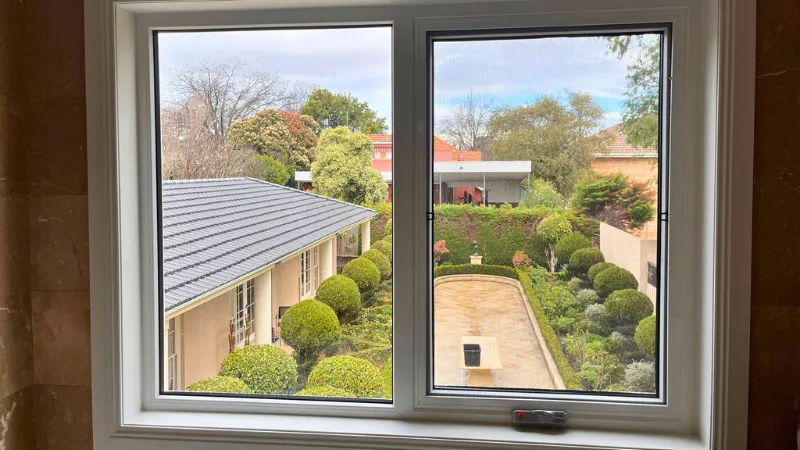
Forget the Pinterest mood boards for a second. The real story of what’s happening with windows and doors in Australian homes right now isn’t about what looks good in a styled photoshoot — it’s about what people are choosing when their own money is on the line, for their own house, in their own climate.
And what they’re choosing in 2026 is telling. The flashy, look-at-me glazing decisions are giving way to something more considered. Homeowners want windows and doors that make their homes quieter, more comfortable in every season, cheaper to heat and cool, and better looking from the street — without screaming for attention. They want products that work as hard in year fifteen as they do on installation day.
That’s a shift worth paying attention to, and it’s one that plays directly to the strengths of APS Double Glazing. When the priority moves from chasing aesthetics to demanding performance and aesthetics together, the product has to be genuinely good — and the company behind it has to know how to specify the right solution for each home. APS has been doing exactly that across Melbourne and regional Victoria with their full range of Australian-manufactured uPVC double glazed windows and doors.
Here’s what’s actually driving decisions this year — and which ideas are worth borrowing for your own home.
The appetite for larger windows and more generous glazed openings hasn’t faded, but the thinking behind it has sharpened considerably. In 2026, the homeowners getting the best results aren’t the ones glazing every wall floor-to-ceiling. They’re the ones putting serious glass where it actually earns its keep — a north-facing living area that captures winter sun, a kitchen window scaled up to frame the garden view, a bedroom bay window that transforms the space from ordinary to something you actually want to wake up in.
The difference between good large glazing and regrettable large glazing almost always comes down to orientation and specification. A big double-glazed window on a north wall with appropriate shading is a passive solar asset. The same glass on an unshaded west wall turns your living room into a slow cooker from October to March.
APS Double Glazing’s in-home consultation exists specifically to get this right. The team looks at your home’s orientation, your existing insulation, where you’re losing heat in winter and gaining it in summer, and recommends the right product for each position. That might be an expansive fixed window to drench a dim hallway in natural light, an oversized bay or corner window that turns a flat wall into a feature, or a generous sliding window that opens a kitchen up to a courtyard. The point is that APS has the range to match the ambition — without the thermal compromises that make people regret going big.
One renovation tip that keeps proving itself: a single well-placed oversized window in the right room often transforms a home more dramatically than replacing every window in the house — and costs a fraction of the price. It’s the kind of move that affects your energy bills in ways you can actually measure.
Here’s a trend that’s been building quietly and has arrived with force in 2026: homeowners are moving away from black window frames as the automatic choice.
Black had a strong run. In the right architectural context — a crisp contemporary build with clean lines and neutral cladding — it still looks excellent. But black became a default, and defaults eventually look like defaults. Across thousands of Australian homes, black frames were specified not because they were the best choice for that particular building, but because they seemed like the safest “modern” option.
The problem shows up in real life rather than in renders. Black frames against warm red brick look jarring. Against cream or sandstone render, they can feel heavy. Against timber weatherboard, they compete rather than complement. The materials that define most Australian homes — the earthy tones, the warm masonry, the natural timber — want something warmer sitting in them.
In 2026, the shift is toward bronze, warm charcoal, deep olive, dusty brown, muted clay tones, and woodgrain finishes that settle into a facade rather than announcing themselves. APS Double Glazing carries one of the widest colour palettes in the Australian uPVC market — well beyond the basic white-or-black binary that many suppliers offer. You can download the full APS colour chart to see the range, or work through colour options during your free in-home consultation where you can see samples against your actual brickwork and render.
The front door is where this colour shift delivers the most visible return for the least disruption. Swapping a tired front door for an APS entrance door in a warm contemporary tone — with the right panel style and glass treatment — can lift a facade in ways that feel disproportionate to the spend. It’s arguably the single best-value exterior upgrade available in 2026, and APS’s entrance door range gives you the panel designs, glass options, and colour variety to make it count.
If you’ve been weighing up bifolds versus sliders for a new opening to your deck, garden, or alfresco area, the market has largely made the call for you. Stacking sliding systems have overtaken bifold doors as the preferred choice for large indoor-outdoor openings in 2026 — and for practical reasons, not just fashion.
Bifolds look impressive when open, but they carry more operational complexity. More hinges, more hardware, more moving parts, more things that can fall out of alignment in a country where temperatures swing 30 degrees between seasons and UV exposure degrades lesser materials fast. They also need clearance — the panels have to fold somewhere, which eats into usable floor or deck space.
Stacking sliders solve both problems. A six or eight-panel stacking door from APS Double Glazing slides open to create essentially the same wide-open connection to the outdoors, but seals tighter when closed, requires less maintenance over its lifespan, and doesn’t need the room to fold. In uPVC, the thermal and acoustic performance is significantly better than aluminium bifold equivalents — your home stays warmer in winter, cooler in summer, and quieter year-round.
That said, bifolds aren’t dead. In certain configurations — particularly where the opening is modest or the architectural brief specifically calls for folding panels — they still make sense. APS manufactures bifold doors in uPVC as well, so you’re not locked into one system. The key is choosing based on how you’ll actually use the opening, not based on which looks better in a magazine spread. For more compact outdoor connections, APS’s sliding patio doors are another strong option that maximises light and access without requiring a wide structural opening.
The push toward slimmer, less visually intrusive frame profiles continues in 2026, and it’s matured past the “thin for thin’s sake” phase. What homeowners and architects actually want is maximum glass area with minimum visual frame — sightlines that let the view do the talking.
The risk with this trend has always been that slimmer profiles in cheaper products mean weaker structures. Budget slimline frames that thermally bridge, bow under load, or lose their seal within a few years deliver neither the aesthetic benefit nor the performance benefit. You get thin frames and thin results.
APS Double Glazing’s European-engineered uPVC profiles are designed to be slim where it matters visually while retaining the multi-chambered structural integrity and thermal break performance that makes double glazing actually work. The profiles maintain their shape, their seal, and their appearance across a 25–30 year product life — which is roughly the lifespan during which you need the trend to still look like a good decision. APS’s casement windows, tilt and turn windows, and awning windows all demonstrate what clean sightlines look like when the engineering behind them is genuinely sound.
Reeded, fluted, and obscure glass treatments have moved firmly out of the “niche” category and into mainstream residential design in 2026. The appeal is easy to understand: textured glass gives you privacy without blocking light, and it turns the glass itself into a design feature rather than just a transparent surface.
For period homes and older renovations, textured glass does something clever — it references the patterned glass that was common in mid-century Australian homes without looking retro. It feels both contemporary and historically sympathetic, which is a difficult balance to strike with most design choices.
In contemporary homes, reeded or fluted glass adds a layer of warmth and materiality to spaces that can otherwise feel a bit sterile when everything is clear, flat, and reflective.
The practical applications are everywhere: sidelights beside front doors, bathroom awning windows where you want light without exposure, internal glazing between rooms, shaped feature windows in stairwells or hallways, and decorative panels in entrance doors. APS Double Glazing can specify a range of textured and decorative glass treatments across the product range, so this is a trend you can adopt in a single window or carry through the entire house.
Here’s a trend that barely registers in design magazines but ranks near the top of what homeowners actually value after installation: noise reduction.
The demand for quieter homes has accelerated through 2025 and into 2026, driven by denser urban living, more people working from home in spaces that were never designed as offices, and a growing recognition that chronic noise exposure affects sleep, concentration, and general wellbeing more than most people realise until the noise stops.
Quality double glazing with dissimilar pane thicknesses, laminated glass options, and proper frame sealing makes a dramatic difference. And this is one of the areas where uPVC genuinely outperforms aluminium. The multi-chambered profile structure of APS Double Glazing’s frames, combined with tight weather sealing, delivers measurably better sound insulation than aluminium frames of comparable size. For homes on busy roads, near flight paths, or in high-density areas, APS can specify dedicated soundproof window configurations using asymmetric glass pairings and laminated interlayers that cut outside noise to a level that genuinely changes how a room feels.
Many APS customers report that the noise reduction is the first thing they notice — even before the temperature difference. It’s a quiet upgrade in every sense, and one of the strongest arguments for choosing uPVC double glazing from a company that understands how to specify it properly.
The smart home industry would love you to believe that 2026 is the year of the fully automated, app-controlled, self-tinting window. And some of that technology is genuinely impressive in specific applications — a motorised louvre system on a large skylight with heat control issues, for instance, can be a smart investment.
But for most homes and most windows, the smart features worth installing are modest and proven: multi-point locking systems with quality hardware, sensor-integrated security on entry points, and motorised blinds for hard-to-reach glazing. These solve real problems without introducing the reliability concerns and obsolescence risk of complex connected systems.
APS Double Glazing takes a similar view. Their products focus on the fundamentals that deliver value every day for decades — security-rated hardware and multi-point locking that keeps your home safe without needing an internet connection, a software update, or a subscription fee. When the baseline performance is excellent, you need less technology to compensate for it.
One of the most underappreciated advantages of working with APS Double Glazing is that custom doesn’t mean expensive. Because APS manufactures all their uPVC windows and doors here in Australia, non-standard sizes, unusual shapes, and bespoke configurations are part of the normal workflow — not an exception that triggers a premium surcharge.
This matters because 2026’s broader design direction is toward individuality. Homeowners want their homes to feel considered and specific to them, not assembled from a catalogue of standard sizes. Windows at full ceiling height rather than builder-standard dimensions. Shaped windows — arches, circles, raked tops — that respond to the architecture of the house. Tilt and turn windows in proportions that suit European-inspired renovations. French doors sized to fit existing period openings without the awkward filler panels that give away a retrofit.
The key is making these decisions at design stage rather than trying to substitute custom products into a structure that’s already been framed for standard sizes. APS’s consultation process is designed to capture these opportunities early — so the final result looks intentional rather than adapted.
Not every 2026 idea works in every setting. Here’s the honest breakdown:
New builds have the most freedom. Large glazing openings, corner-opening systems, stacking door runs planned from the structural stage, and consistent colour throughout — this is where the full APS product range can be specified without compromise.
Extensions and major renovations are where the indoor-outdoor trends deliver the most dramatic return. A new APS stacking door connecting a renovated living area to a deck or garden is one of those changes that makes people wonder why they waited so long.
Period homes and older houses — brick veneers, weatherboards, Edwardian terraces, California bungalows — benefit most from the colour and texture trends. A warm-toned front door, textured glass sidelights, and a sympathetic frame colour can lift a period facade beautifully without the aesthetic clash of forcing ultra-contemporary systems into a traditional structure.
Small or dark homes should focus on the strategic glazing approach: one large, well-positioned fixed window or casement window in the right orientation will do more for liveability than scattering glass everywhere and hoping for the best.
Most trend articles skip this part. We won’t.
Black frames on warm-toned homes. If your house is red brick, cream render, sandstone, or timber weatherboard, black frames are a gamble that ages poorly. The full APS colour palette means you can choose a tone that actually belongs on your facade — no need to default to black because it’s all that’s available.
Glass walls facing the wrong direction. Maximum glazing on a west or south-west elevation without thermal consideration creates a home that’s beautiful on paper and miserable to live in for half the year. APS’s in-home assessment catches this before you’ve committed.
Smart tech tied to a specific platform. Any window or door feature that depends on a particular app, cloud service, or proprietary ecosystem is a feature with an expiry date. Invest in mechanical quality and hardware that works independent of technology cycles.
The principle worth repeating: the homes that still look and feel great in 2040 are the ones where the 2026 decisions were about fundamental quality — light, comfort, thermal performance, noise reduction, and materials that hold up — rather than about chasing whatever looked most impressive in that year’s trend report. That’s the philosophy behind every APS Double Glazing project.
APS Double Glazing manufactures the full range of uPVC double glazed windows and doors right here in Australia — awning windows, sliding windows, bifold and stacking windows, stacking doors, French doors, entrance doors, back and laundry doors — in every colour, glass option, and custom configuration. UV stable, built for Australian conditions, installed by APS’s own teams.
Get your free quote or call 1300 294 101 to book a consultation and see which 2026 ideas suit your home.
The standout shifts are the move away from default black frames toward warmer, earthier colour palettes; smarter placement of large-format glazing rather than glass for glass’s sake; stacking door systems overtaking bifolds for indoor-outdoor openings; textured and reeded glass as a privacy and design feature; acoustic performance being treated as a genuine priority; and a preference for custom sizing over standard builder-grade dimensions. APS Double Glazing’s product range is built to deliver on every one of these.
In the right context — clean contemporary architecture, modern cladding, industrial-style homes — black still works well. But the broader market is moving toward warmer tones that integrate more naturally with Australian building materials. APS offers black alongside a wide range of bronze, charcoal, olive, woodgrain, and earthy alternatives so you can choose what genuinely complements your home rather than defaulting to the most common option.
Deep olive, dusty bronze, warm brown, muted clay, and soft warm neutrals are the strongest choices in 2026. These colours feel settled and sophisticated against Australian brickwork, render, and timber without dating as quickly as bold primaries or stark contrasts. APS’s front and entrance door range is available across the full colour palette with a wide selection of panel styles and glass treatments.
Stacking sliders have become the more popular choice in 2026 for large openings, primarily because they seal better, need less maintenance, and don’t require the clearance space that folding panels demand. Bifolds still suit certain configurations and smaller openings. APS manufactures both stacking doors and bifold doors in uPVC — the right choice depends on your specific opening, usage, and architectural brief rather than on which is trendier.
Slim frame profiles that maximise the glass area, larger-format windows, consistent frame colour throughout, and full-height glazing in key living areas are the most effective moves. Textured or reeded glass can also add a contemporary edge. APS Double Glazing’s casement, fixed, and tilt and turn windows deliver this look in high-performance uPVC with the slimline profiles that make the difference.
For most homes, the proven, practical smart features — quality multi-point locking, sensor security, motorised blinds on hard-to-reach glazing — deliver far more daily value than expensive electrochromic glass or fully automated window systems. Complex smart tech introduces reliability concerns over a 25–30 year product life. APS Double Glazing prioritises the fundamentals: excellent security hardware, superior thermal performance, and build quality that doesn’t need an app to function.
Period homes, brick veneers, and weatherboard cottages benefit most from warmer frame colours, textured glass for privacy and character, and a considered front door upgrade. Forcing ultra-modern glazing systems into traditional architecture usually creates visual tension rather than improvement. APS Double Glazing’s extensive colour range, custom sizing capability, and range of glass treatments make it straightforward to upgrade an older home sympathetically — improving performance and appearance without compromising the character that makes the house worth keeping.
Industrial black frames on homes with warm traditional materials, maximum glazing on thermally problematic orientations, and smart technology dependent on specific proprietary platforms are the most likely to feel regrettable within a few years. The trends with the longest shelf life are the ones that improve how the home fundamentally performs — better thermal comfort, better acoustics, better light, better materials. That’s why APS Double Glazing always starts with performance and builds the design around it.