
November ONLY: 35% OFF
APS IS OFFERING 35% OFF ALL ITEMS GET YOUR QUOTE NOW
APS IS OFFERING 35% OFF ALL ITEMS GET YOUR QUOTE NOW

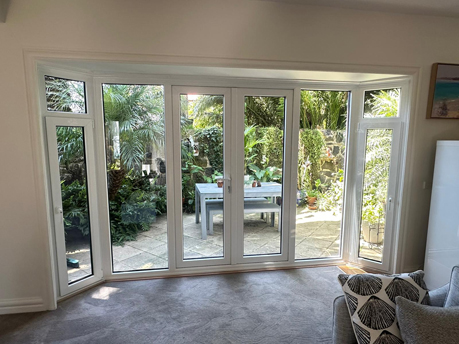
Door choice shapes how a home works day to day more than most people expect. A sliding door onto an alfresco area and a set of French doors to the same space change floor use, circulation, opening width and maintenance in very different ways, so the role doors play is worth thinking through for each position.
This guide covers the five types used most in Australian homes (sliding, hinged, French, bifold and pivot), plus a quick look at other types of doors and door materials. For each, it explains how it works, where it performs well and the trade-offs, so choosing doors for interior and exterior positions, from the front door to the link between indoor and outdoor spaces, gets easier.
If you already have a door type in mind and want to explore specific products before reading the full comparison, our guides to double glazed sliding patio doors and double glazed bi-fold doors cover the two most commonly specified external door systems in Australian homes, useful reading if you’re moving toward a product decision rather than starting from scratch.
A sliding door moves horizontally along a track. In a standard two-panel configuration, one panel is fixed and the other slides behind it. Multi-panel stacking configurations use two or more panels that slide and stack, opening a wider portion of the total span.
How they work: The sliding panel runs on a bottom track with rollers (or on a top-hung track in some systems), and the doors slide horizontally within the frame. A handle on the sliding panel provides grip; a lock engages when the door is closed. A quality sliding mechanism gives smooth operation for years.
Best for: The main connection between a living area and an outdoor space, patio, alfresco, or garden in Australian homes where that connection is used daily. Compact spaces where outward or inward swing isn’t practical. Bedrooms and living rooms where the door panel shouldn’t consume floor space when open.
Genuine advantages: Sliding doors require no swing clearance; the panels move entirely within the plane of the wall and floor. This space saving design makes them significantly more efficient than any hinged door type in tight layouts. They’re also operationally simple, accessible for most users, and integrate cleanly with both flyscreen and security screen systems. Glass sliding doors with large glass panels bring plenty of natural light into the room, and quality systems in uPVC doors or thermally broken aluminium frames with double glazing are energy efficient performers for both thermal comfort and everyday practicality.
Trade-offs: A standard two-panel sliding door opens approximately half its total width. Stacker systems open more, but at a greater cost. Track maintenance, clearing grit and debris, is ongoing. Sliding doors tend to seal less effectively than compression-sealed hinged doors, which is relevant for energy efficiency in climates with significant temperature extremes.
A hinged door, the classic swinging door, is the simplest and most common door type in residential construction. It’s attached to the door frame by two or three hinges along one vertical edge and swings inward or outward on them. Door construction ranges from hollow-core panels and flush doors with a plain, smooth surface to solid doors in timber or composite; glazed hinged doors add a glass panel or full-height glazing to the standard construction.
How they work: The door leaf pivots on hinges fixed to one jamb. When opened, the door swings in an arc approximately equal to its width in the direction of the swing.
Best for: Interior doors throughout the home, between rooms, to bathrooms, laundries, and bedrooms. External doors in secondary positions (side entries, rear entries, laundry exits) where the opening is modest and everyday simplicity is the priority. Single doors for entries of all styles, where one door is all the opening needs.
Genuine advantages: Hinged doors are the most flexible and widely available door type. They come in every material, style, and size, from the cheapest hollow-core internal panel to premium solid wood doors for entrances. They seal tightly when the latch and hardware are of good quality. They’re the most straightforward to hang, adjust, and maintain.
Trade-offs: The swing arc consumes floor space. In compact rooms where furniture is positioned close to doorways, this can significantly constrain layout options. External hinged doors used as the primary indoor-outdoor connection have a narrower opening width than sliding or stacking systems.
French doors are double doors: two hinged leaves with glass panes or glass inserts that open from a central meeting point. Both leaves hinge outward (or inward), either both together for a maximum opening, or one leaf secured as a fixed panel with the other used for everyday access.
How they work: Each leaf is hinged at its outer vertical edge. When opened outward, both doors swing away from the opening simultaneously; when opened inward, they swing into the adjacent space. Multi-point locking hardware typically secures the primary leaf; flush bolts at the top and bottom secure the secondary leaf.
Best for: Heritage, period, and farmhouse-style homes where the architectural language complements the hinged-glass-door aesthetic. Secondary outdoor connections, a bedroom to a private courtyard, a dining room to a terrace, where the visual character of the opening matters and the frequency of use is moderate rather than daily. Smaller openings where the full-width opening of both leaves suits the space.
Genuine advantages: When both leaves are open, French doors clear the full frame width with no fixed panel, a complete opening that no sliding system achieves. The visual character is distinctive and suits period and traditional architectural styles in ways contemporary sliding systems don’t. They can be well specified with multi-point locking to achieve strong security performance.
Trade-offs: Two leaves swinging outward require substantial clearance in the direction of the swing, typically 800 to 950mm per leaf, which can be impractical in compact outdoor spaces or where paving is immediately adjacent. For daily-use main connections in busy family homes, the operational experience is generally less practical than a quality stacking slider. Screening for French doors is more complex than for sliding doors.
Bi fold doors are folding doors with multiple panels hinged together that fold concertina-style and stack to one or both sides of the opening. When fully open, the stack of folded panels sits to the side, and the opening is largely clear, typically 70 to 90% of the total span depending on configuration.
How they work: The panels are connected by hinges between each leaf and run on a top track (and usually a bottom track) along which the folded stack can slide to the side. A pivot point at each end of the stack allows the folding motion. A traffic door, a single leaf that opens independently, is often included in bi fold systems to provide everyday access without engaging the entire system.
Best for: Dedicated entertaining areas where the full-open effect is used regularly and is a design priority. Wide openings of 3 to 6 metres or more that would require many panels for sliding systems. Homes where the indoor-outdoor connection is the architectural centrepiece of the design.
Genuine advantages: When fully open, bifolds create a dramatic opening that makes inside and outside genuinely continuous; the full-open effect is compelling and suits the Australian outdoor-living culture well. Configurations can include traffic doors for practical everyday access without operating the whole system.
Trade-offs: More hardware than sliders means more maintenance, hinges, multiple pivot points, and track hardware all require periodic attention. In coastal environments, this hardware is under greater corrosion stress. The stacking panels require clear wall space to land against on one or both sides, which constrains furniture placement and adjacent design elements. For daily use by family traffic, sliders are generally more practical. Cost is typically higher than comparable sliding systems.
A pivot door rotates on a vertical pivot point rather than hinging from the side of the frame. The pivot is typically located near the door’s edge (creating an offset pivot) or at the centre of the door (creating a centre pivot). The effect when the door opens is a distinctive, weighty architectural rotation that no standard hinged door can replicate.
How they work: The door leaf is mounted on a pivot mechanism fixed at the floor and head of the frame. Turning the handle initiates a smooth rotation on the pivot axis. The door’s weight is supported by the pivot hardware rather than by side hinges.
Best for: Statement entry doors on contemporary new builds, architecturally designed homes, and premium renovations where the entry is an intentional design feature. Larger-format doors where standard hinges would be insufficient to carry the weight of a heavy, wide door leaf. Pivot doors also appear in commercial buildings, where a large, decorative entry sets the tone.
Genuine advantages: The visual experience of a pivot door is genuinely distinctive. A wide, heavy door that rotates smoothly on its pivot creates an entry experience that feels resolved and architectural in a way standard doors don’t. Pivot systems can carry door weights and sizes that standard hinges can’t accommodate, enabling very large-format entry configurations and decorative doors.
Trade-offs: Pivot doors are engineering products at the premium end of the cost range. The pivot mechanism requires precise installation and quality hardware to operate smoothly over the long term; budget pivot systems develop operational problems relatively quickly under the load of a heavy door. The swing arc on both sides of the pivot point needs to be clear; the portion of the door on the inside of the pivot swings into the room when the door opens, which can conflict with adjacent furniture or wall elements.
Regardless of which door type you choose, security performance often comes down to more than just the style, hardware, glazing, and installation; all play a role. This guide on advanced security windows and doors explains what actually improves protection and what to look for when specifying doors for Australian homes.
Sorting types of doors based on how they open, a few more are worth knowing:
Door materials affect durability, insulation and upkeep as much as the opening style. Solid wood and wooden doors offer warmth and good sound insulation but need regular sealing, while solid wood doors are heavy and best suited to entries. Composite doors combine a timber or foam core with a weather-resistant skin. Steel doors and other metal doors are strong and secure, and fibreglass (fiberglass) doors resist moisture and dents. uPVC doors, sometimes called PVC doors, are energy efficient and low maintenance, with no painting required. For glazed doors, toughened or laminated glass adds safety and helps with noise.
The most useful question is: what does this door primarily need to do?
For everyday indoor-outdoor connections in Australian family homes, sliding doors, particularly quality stacking systems, deliver the best combination of practicality, space efficiency, screen integration, and long-term usability.
For openings where the full-open effect is genuinely used and valued, bifolds earn their additional cost and maintenance.
For period and heritage homes or secondary connections where visual character matters, French doors suit the architectural language.
For entry doors where making a design statement is the brief and the budget supports it, pivot doors are unmatched.
For internal doors and standard secondary entries, hinged doors in the appropriate material and style are the reliable, practical default.
A few recurring errors account for door choices that don’t serve the space well in practice. These are the ones most worth thinking through before committing.
A dramatic bifold that’s only fully opened twice a year may be less valuable than a quality stacker used confidently every day. Consider the actual use pattern of the opening, not how the door looks when it’s fully open in a showroom.
French doors, hinged doors, and bifolds all require clearance that can conflict with outdoor paving, indoor furniture, or adjacent walls. Measure the required swing arc before selecting a door type for any tight layout.
Heavy doors, large-format sliders, and pivot entrance doors require hardware specified for the load. Budget hardware fails noticeably faster under weight, and replacement is often more disruptive than spending more at the outset.
For any external door in Australian conditions, insect screening is essentially non-optional. The screen solution should be planned alongside the door type, not added afterwards; some door types have significantly more complex screening options than others.
Sliding, hinged, French, bifold and pivot doors each suit different positions and purposes. The right choice comes from how the space will actually be used, not how the door looks in a showroom.
Sliding and hinged doors cover most everyday needs. French doors, bifolds and pivot doors suit specific contexts and different architectural styles, and in those contexts they excel.
APS Double Glazing supplies and installs double glazed uPVC sliding, stacking, French, bifold and entrance doors across Melbourne, and the team can help you match the right door to each opening.
Sliding doors are the most space-efficient for compact areas because they require no swing clearance. The panels move within the plane of the wall, allowing furniture to be positioned right up to the door without conflict.
Quality stacking sliding systems suit the everyday demands of Australian indoor-outdoor living best, with operational simplicity, screen integration, and practical daily use. Bifolds are compelling for entertaining-focused spaces where the full-open effect is regularly used and valued.
Any door type can be well-secured with quality hardware. Hinged entry doors with multi-point locking and appropriate frame fixing are among the most secure. Sliding doors with anti-lift pins and multi-point locking are adequately secure for residential applications. Hardware quality matters more than door type for security performance.
Standard hollow-core hinged internal doors are the least expensive. For external applications, standard two-panel aluminium sliding doors are generally the most affordable option. Bifolds, pivot doors, and premium stacking systems are on the higher end of the cost spectrum.
For main indoor-outdoor connections in Australian homes, sliding doors are generally more practical, with no swing clearance needed, simple operation, and good screen integration. For internal doors, hinged doors are the more flexible and widely available option. The right answer depends on the specific position and use.
Yes. Double glazing is available across all five door types. Frame specification, whether uPVC or thermally broken aluminium, affects thermal performance as much as the glazing itself and should be considered alongside the glass unit specification.