
OCTOBER ONLY: 35% OFF
APS IS OFFERING 35% OFF ALL ITEMS GET YOUR QUOTE NOW
APS IS OFFERING 35% OFF ALL ITEMS GET YOUR QUOTE NOW

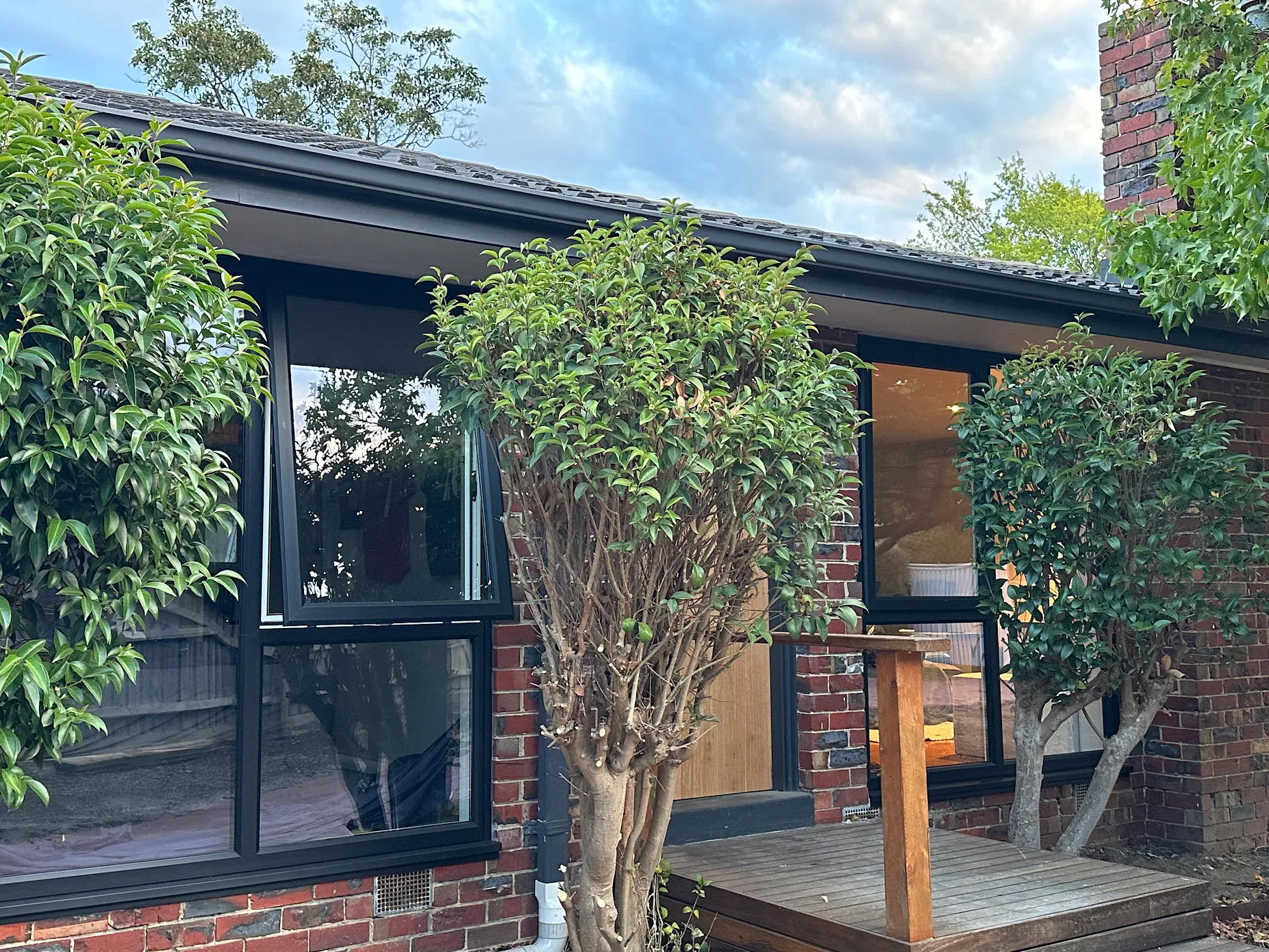
When window suppliers describe their products as sustainable, recyclable, or eco-friendly, the claim is often technically true, but in practice, it can be overstated. Whether a material is recyclable and whether it is actually recycled in any given location are different things. Whether operational energy savings justify embodied manufacturing carbon depends on how the home is used. Whether a 25-year product lifespan makes a frame material “durable enough for sustainability purposes” is a different question from whether it can be collected and processed at the end of life.
For homeowners, designers, and specifiers trying to make genuinely informed material choices, the industry narrative of “uPVC is recyclable, therefore uPVC is sustainable” is incomplete. This article explains what the sustainability claims around different window materials actually rest on, where those claims hold up, and where they need more caution.
For homeowners weighing long-term environmental impact, the most practical decisions often come down to choosing durable products that lower energy demand over time, whether that means specifying energy-efficient double glazed fixed windows for areas that don’t need ventilation or planning a broader sustainable window replacement in Melbourne with a focus on materials that are built to last. Looking at durability, thermal performance, and realistic end-of-life outcomes together gives a much clearer picture than relying on a simple “recyclable” claim on its own.
Sustainability for a building material isn’t reducible to any single property. A material could be:
The full lifecycle view — raw material extraction, manufacturing (including embodied energy), transport, installation, service life, maintenance, and end-of-life recovery — is the only complete framework for judging a material’s environmental credentials. Single-metric claims (“it’s recyclable,” “it lasts longer,” “it reduces energy use”) are true but partial.
Each of the three main frame materials — unplasticised polyvinyl chloride (uPVC), aluminium, and timber — has a different environmental story, and none of them is straightforwardly good or bad across all lifecycle stages.
uPVC is derived from petrochemical feedstocks. The raw material origin — oil and natural gas — is a legitimate concern for anyone thinking carefully about material sustainability. Manufacturing uPVC also involves chlorine chemistry, which has historically had environmental and health implications at some processing stages, though modern production methods have substantially reduced these.
Where uPVC makes its sustainability case is in durability and low maintenance. Frames that don’t require repainting, don’t corrode, and don’t warp can realistically serve for 30 years or more with minimal inputs. Over that service life, the per-year embodied impact of the initial manufacturing is spread across a longer period, which improves the material’s relative efficiency.
The thermal performance case is also genuine. uPVC’s multi-chamber profiles trap still air effectively, producing frame U-values comparable to or better than thermally broken aluminium in many configurations. Better-insulating frames mean lower operational energy demand, which over a long service life represents a real reduction in household carbon emissions — provided the home is actively conditioned.
One of the most important questions for Australian homeowners is what actually happens to uPVC windows at the end of their service life. The European recycling systems often cited in industry literature are genuinely impressive — large-scale collection networks, closed-loop processing that converts old profiles back into new ones, and carbon dioxide (CO₂) savings in the order of two kilograms avoided per kilogram of recycled content. But these systems exist because industry and policy in Europe have built them over decades.
In Australia, uPVC window recycling infrastructure is less developed. Some specialist recyclers and take-back programmes exist, but the organised national collection and processing network that characterises the European PVC window recycling landscape currently doesn’t have an equivalent at scale in Australia. This means that recycling at the end of life is a meaningful caveat for Australian homeowners, and that claiming uPVC is “recyclable” doesn’t automatically translate to it being recycled in their location.
Primary aluminium production is highly energy-intensive — the smelting process is one of the most energy-demanding industrial processes available. This gives primary aluminium a significant embodied carbon burden in its production.
The counterpoint is aluminium’s recyclability: it is widely, efficiently, and economically recycled. Australian aluminium recycling infrastructure is well developed. Recycling aluminium requires only around 5% of the energy of primary production, making recycled aluminium a very different material from a lifecycle perspective. The fraction of recycled content in any given aluminium window profile is therefore a meaningful sustainability question.
For thermally broken aluminium frames — the performance-appropriate choice for double glazing applications in most Australian contexts — the polyamide thermal break strip adds a different material stream that requires separation at the end of life. This complicates the recycling picture somewhat compared to homogeneous aluminium frames.
The sustainability argument for aluminium rests strongly on its recycling economics: it’s valuable enough that it’s recycled at high rates in practice, not just in theory. The counterpoint is the high embodied carbon in new aluminium production, which makes specifying products with recycled content more significant than for most other frame materials.
Timber has a fundamentally different environmental profile from both uPVC and aluminium. Sustainably harvested timber stores biogenic carbon within the material — carbon that was drawn from the atmosphere during the tree’s growth. This carbon storage, combined with low processing energy relative to metal or plastic production, gives sustainably sourced timber a compelling embodied carbon story.
The qualification “sustainably sourced” is critical. Timber from poorly managed forests has a very different environmental profile from Forest Stewardship Council (FSC)-certified or equivalent material. In Australia, both locally sourced and imported timber window frames are available, with variable certification status.
The lifecycle challenge for timber is maintenance and moisture management. Unpainted or poorly maintained timber absorbs moisture, is susceptible to decay, and — in coastal or high-humidity environments — can require replacement at intervals that substantially shorten its effective service life. A 10-year timber frame that fails and needs replacement has worse lifecycle sustainability than a 30-year uPVC or aluminium frame, even accounting for embodied carbon differences.
The most interesting material in this category is composite frames — typically timber interior, aluminium exterior. The aluminium exterior protects the timber from the weather and reduces maintenance requirements substantially. The timber interior contributes to thermal performance and brings the embodied carbon advantage of wood. These frames are typically more expensive but can offer genuinely strong lifecycle environmental performance.
Window glass recyclability is more complicated than it first appears, particularly once coatings, laminates, and sealed units are involved.
Standard float glass — the basic raw material of window panes — is technically recyclable. Glass can be melted and reformed without significant degradation. This is why glass bottles are recycled at high rates in many countries: the process works, it’s economically viable, and collection systems exist.
Window glass is different in several important respects.
Modern energy-efficient window glass typically includes low-e metallic coatings (on the glass surface), laminated interlayers (polyvinyl butyral or PVB film bonded between panes), and, in some cases, solar control or acoustic coatings. These additions change the glass’s composition and can contaminate the glass recycling stream. Removing them before recycling adds cost and complexity. In practice, coated and laminated glass is often not accepted by standard glass recycling systems.
An insulating glass unit (IGU) — commonly in the form of a double glazed unit — refers to two or more panes of glass bonded together with spacer bars, edge sealants, and sometimes gas fill — all sealed into an assembly. Separating the components for recycling requires breaking the seal, handling any residual gas fill, removing sealants and spacers, and processing the two glass panes separately from the metallic spacer materials. This is technically possible but practically more complex and costly than processing single-pane glass.
The spacer bar is typically aluminium (or a composite warm-edge material), and the edge sealant is a polymeric compound. Both need to be separated from the glass before recycling. The sealant, in particular, is not easily recovered for reuse.
In Australia, the most common end-of-life outcome for old double glazed units is currently disposal to landfill or, at best, sending the glass component to glass crushing and aggregate use rather than closed-loop glass recycling. This is a less circular outcome than the “glass is recyclable” statement implies.
In practical terms, this means that double glazed units at the end of life present a more complex recyclability picture than either the glass or the frame alone. The frame material (uPVC or aluminium) may have an established recycling pathway; the glass unit itself may not, particularly if it includes coatings or laminate layers.
This is not an argument against double glazing — its operational energy savings vastly outweigh its recyclability disadvantage in most scenarios. It is an argument for being precise about what “sustainable” means for a sealed glass unit, and for not overstating the recyclability case.
The fundamental sustainability trade-off for any window upgrade is between the embodied carbon invested in making and installing the new windows and the operational carbon saved through better thermal performance during the product’s service life.
For a home replacing single glazed aluminium windows with well-specified double glazed units in a cold climate, the operational savings over 25–30 years are substantial, and the embodied carbon cost is repaid relatively quickly. The upgrade is net-positive on carbon over the window’s lifetime in most heating-dominated Australian climates.
For a home upgrading already-functional older double glazed windows primarily for sustainability reasons, the embodied carbon cost is incurred in full, but the operational saving is more modest (the existing windows were already performing some insulating function). The payback period is longer and may not fully close within the product’s service life, depending on the climate and conditioning use.
The honest guidance: the most sustainable windows are typically the ones that don’t need replacing. Maintaining, repairing, and extending the life of functional existing windows — replacing seals, adjusting hardware, reglazing failed IGUs — is often a lower embodied-carbon path than full replacement. This runs counter to the commercial interest of most window suppliers, but it is the more honest environmental position for many existing homes.
The most underrated sustainability argument for any building material is longevity. A frame that lasts 40 years has half the per-year embodied impact of a frame that lasts 20 years at equivalent manufacturing carbon. The best sustainability case for uPVC’s long service life is not that it can be recycled — it’s that it doesn’t need to be replaced as often as alternatives that require painting and maintenance.
Repairability is a related consideration. Can hardware be replaced when it wears out? Can seals be replaced when they degrade? Can a failed IGU be reglazed without replacing the entire frame?
uPVC frames are not generally repairable in the sense of material repair — if the profile is structurally compromised, it needs replacement. But hardware can be replaced, and a failed IGU can sometimes be reglazed into an existing sound uPVC frame, extending the service life without full replacement. This is a genuinely sustainable outcome — retaining the embodied carbon investment in the frame while refreshing the glass performance.
Aluminium frames also allow IGU reglazing, and their structural durability is high. Timber frames can be repaired in ways that uPVC and aluminium cannot — a cracked or rotted section of timber frame can be spliced, filled, or sister-repaired by a skilled joiner. This repairability means a well-maintained timber window can have an indefinite service life in principle, which is an environmental advantage that’s rarely counted in material comparisons.
Rather than asking “which material is most sustainable?” — which has no universal answer — these questions produce more useful guidance for specific decisions:
A uPVC frame in an inland Australian home may achieve 30+ years. The same frame in a coastal salt-spray environment may degrade faster. A timber frame in a well-protected, regularly maintained inland setting may outlast either.
For aluminium, yes — Australian infrastructure is good. For uPVC at the end of life, more investigation is needed. For complex sealed glass units, realistic expectations should be landfill or aggregate use rather than closed-loop recycling.
In cooler climates, replacing single glazing, the answer is almost certainly yes over 25+ years. In mild climates, replacing already-functional double glazing, the answer is more nuanced.
Reglazing a failed IGU into an existing frame, fitting secondary glazing into original timber frames, or draught-sealing and repairing functional older windows are all lower-embodied-carbon interventions than full system replacement in appropriate circumstances.
Sustainability claims around windows are often made in good faith but rely on shortcuts — broad statements that are true in some contexts and misleading in others. A few of the most common ones are worth unpacking directly:
A material can be technically recyclable while rarely being recycled in practice due to infrastructure gaps, economics, or contamination issues. This applies to both uPVC in many regions and to coated or laminated glass.
uPVC’s petrochemical origin is a real concern, but a long-lasting, low-maintenance frame with good thermal performance and eventual recycling contributes positively to a building’s environmental account when compared with a shorter-lived alternative that requires frequent repainting or replacement.
Sustainably sourced, long-lived, well-maintained timber has a compelling embodied carbon story. Poorly sourced, poorly maintained timber that needs replacement every 15 years does not.
Standard float glass is recycled efficiently. Coated, laminated, or IGU-format glass presents more complex recycling challenges and frequently ends up in aggregate or landfill rather than closed-loop processing.
Low maintenance reduces ongoing material and energy inputs, which is genuinely positive. It doesn’t address embodied impact, recyclability, or what happens at the end of life.
The sustainability of window materials is a lifecycle question that can’t be answered by any single property — recyclability, durability, or thermal performance — alone. uPVC has a genuine sustainability case built on service life, low maintenance, and technical recyclability — with the important qualification that Australian end-of-life recycling infrastructure for uPVC windows is less developed than in Europe.
Aluminium has high embodied carbon in primary production but excellent recycling economics and infrastructure in Australia, making recycled content specification meaningful. Timber has the most compelling embodied carbon story when sourced sustainably and maintained properly, but its service life in practice depends heavily on maintenance commitment and climate.
Window glass — particularly in the sealed, coated, multi-component format of modern double glazed units — presents genuine recycling complexity that the standard “glass is recyclable” claim understates. The most honest sustainability framing for window glass is that operational energy savings over the product’s service life are the primary environmental benefit, and that end-of-life recycling of complex IGUs should be treated as a bonus where available rather than a baseline assumption.
For homeowners making decisions: the most sustainable option is often to maintain and extend the life of functional existing windows, choose materials that will genuinely last in the specific climate and exposure, ask suppliers honest questions about end-of-life handling, and weigh operational energy performance alongside material origin rather than treating any single claim as definitive.
If you’re planning a new build or renovation and want clear guidance on materials and performance, you can speak with our team at APS Double Glazing.
The information in this article is intended as general guidance only. Glazing specifications should be assessed by a qualified professional based on your specific project, site conditions, and applicable Australian Standards.
They can be, with qualifications. uPVC’s long service life, low maintenance requirements, and good thermal performance contribute positively to a building’s environmental account. The limitations are its petrochemical feedstock origin, the relatively less-developed end-of-life recycling infrastructure in Australia compared to Europe, and the complexity of recycling sealed glass units that accompany the frames.
Technically, yes — uPVC can be processed and reused in new profiles, with closed-loop recycling systems operating at scale in parts of Europe. In Australia, the recycling infrastructure is less established, so the practical answer at the end of life depends on local availability of take-back programmes. Recyclability in theory and recycling in practice are different things.
Standard float glass is recycled well in many contexts. Double glazed window glass is more complex: the sealed unit contains spacer bars, sealants, and potentially low-e coatings or laminated interlayers that complicate the recycling process. In practice, sealed IGUs at the end of life often go to aggregate use or landfill rather than closed-loop glass recycling. This is a significant gap in how “glass is recyclable” is usually stated.
The frames and the glass are separate material streams with different recovery pathways. Aluminium frames may be recycled efficiently. uPVC frames may be recycled where infrastructure exists. The sealed glass units themselves — particularly those with coatings or laminates — often present recycling challenges and may end up as construction aggregate or in a landfill. Asking suppliers about their take-back and end-of-life handling is worth doing.
It depends. Sustainably sourced, well-maintained timber that serves for 30+ years has a strong lifecycle carbon profile due to biogenic carbon storage and low processing energy. uPVC has lower maintenance demands and consistent performance regardless of climate and maintenance standards. If timber’s lifespan in a specific climate and application matches uPVC’s lifespan with appropriate maintenance, timber’s embodied carbon advantage is real. If timber underperforms its theoretical lifespan due to poor maintenance or harsh exposure, the comparison reverses.
Primary aluminium production has high embodied carbon; uPVC has a petrochemical origin. Recycled aluminium has very low processing energy and is recycled at high rates in Australia. uPVC has good thermal performance and long service life. Neither is clearly better across all environmental dimensions — the honest answer is that the comparison is climate-specific, application-specific, and depends on the fraction of recycled content in the aluminium being compared.
No. Recyclability is a material property; actual recycling depends on collection infrastructure, economics, and processing capacity. A material that’s recyclable in theory but disposed of in practice contributes less to circular economy outcomes than one that’s widely recycled, even if its theoretical recyclability is more limited.
Over a 25–30-year service life in a climate where windows are a meaningful contributor to heating or cooling demand, operational energy savings typically outweigh embodied manufacturing carbon for modern double glazed units. In mild climates with low conditioning use, or for upgrades from already-functional double glazing, the embodied carbon takes longer to repay. Both matter; neither can be ignored in a complete sustainability assessment.
Yes, often. Reglazing a failed IGU into a sound existing frame retains the frame’s embodied carbon investment. Secondary glazing adds performance without removing original windows. Draught sealing and hardware replacement extend functional life. These interventions have lower embodied impact than full replacement and are frequently the more sustainable choice for homes with functional existing windows.
Ask whether they offer a take-back programme for old frames and glass units at the end of life. For uPVC, ask what happens to removed profiles. For glass, ask whether their supplier has an end-of-life recovery pathway for sealed IGUs or whether disposal to landfill is the expected outcome. Ask what fraction of recycled content is in the aluminium profiles if aluminium frames are being considered. These questions reveal more about actual environmental practice than marketing claims alone.