
November ONLY: 35% OFF
APS IS OFFERING 35% OFF ALL ITEMS GET YOUR QUOTE NOW
APS IS OFFERING 35% OFF ALL ITEMS GET YOUR QUOTE NOW

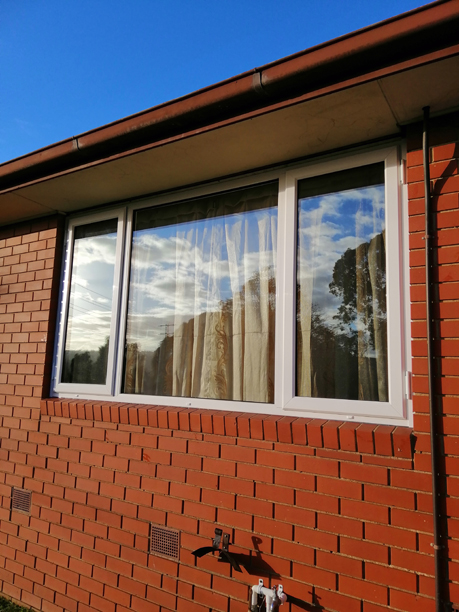
Sliding windows are the most common window type in Australian homes and increasingly popular in commercial spaces, used by homeowners and businesses alike. They suit most architectural styles and come at price points from budget renovations to premium new builds.
But common doesn’t mean always best. Like other window styles, sliders have their own set of strengths and limits. This guide covers the sliding windows advantages and disadvantages in real use, so you can choose the right window for each room rather than defaulting to the familiar.
If you’re comparing window types before deciding, our guides to double glazed casement windows and double glazed awning windows explain how each alternative performs across ventilation, sealing, and everyday use — useful context if you’re weighing up which type suits each room in your home.
A sliding window operates with one or more panels moving along a track within the window frame. In the most common two-panel configuration, one panel is fixed and one operable sash slides horizontally behind it, opening approximately half the total window width. In multi-panel stacking configurations, more than one operable sash slides and stacks, opening a greater proportion of the total span.
That’s the mechanism. Now for what actually matters: the advantages and disadvantages in real-world use.
It’s also worth considering how glazing upgrades interact with the limitations of sliding windows, particularly in cooler climates where insulation performance becomes more important. This comparison of double vs triple glazed windows for Melbourne homes explains when higher-performance glazing can meaningfully offset heat loss and when it’s unlikely to justify the additional cost.
The following covers each genuine advantage in the context of real Australian residential applications, not just ideal-case scenarios.
This is the most practically significant advantage of sliding windows over hinged alternatives, and it’s more important than it might initially seem.
A casement or awning window is designed to swing open outward from the wall. In many positions, this is irrelevant — a garden or open ground outside a window presents no issue. But in narrow courtyards or side passages, next to outdoor spaces with furniture or walkways, or anywhere the outside space is constrained, an outward-opening window creates a real problem. A sliding window doesn’t — the panels move entirely within the plane of the wall, with no projection into the space outside.
This space saving design makes sliding windows a practical solution anywhere there’s limited space outside the window, including many positions above benches, splashbacks and laundry tubs where outward clearance simply isn’t available.
A standard sliding window with minimal frames and expansive glass panels provides unobstructed views and admits good natural light. The horizontal format of most sliding windows suits the proportions of Australian residential architecture well, particularly the single-storey brick veneer and rendered homes that make up much of the residential stock.
Slim uPVC or powder-coated aluminium frames keep the visual weight low, giving a modern look that still suits traditional windows elsewhere on a facade. That clean aesthetic appeal and the near-uninterrupted views are part of why sliding windows remain the default across so many applications.
A sliding window moves with a simple horizontal motion. There’s no mechanism to operate, no crank handle, no multi-step process, and fewer parts to wear out. For everyday use — opening and closing multiple times a day — this simplicity is a practical virtue. It’s accessible for most users regardless of mobility, intuitive for children and guests, and doesn’t require reaching awkwardly or applying force in unusual directions.
For windows in high-traffic living spaces, simplicity of operation is worth more than its lack of drama suggests.
Sliding windows in standard sizes and common configurations are among the most affordable window options available. They’re manufactured at scale, widely stocked, and straightforward to install. For renovation projects where budget is a genuine constraint, sliding windows in well-chosen positions can deliver significant savings — or free up money for a premium specification in positions where it matters most.
Insect screens and security screens integrate cleanly and reliably with sliding window configurations. The fixed-panel side of a standard slider accommodates a screen that covers the operable section, and retractable screen systems work well, so you can let fresh air in without letting insects in. In Australian conditions — where insect exclusion is not optional for most households — this practical compatibility is a real-world advantage that’s easy to take for granted until you’re dealing with a door or window type that complicates screening.
Each disadvantage below carries real-world implications for specific applications. How much each matters depends on the room, orientation, and climate.
This is the most significant operational limitation and the one that most directly affects whether a sliding window is right for a particular position.
In a standard two-panel configuration, the operable panel slides behind the fixed panel. The maximum opening is approximately half the total window width. For a 1200mm wide window, you get 600mm of opening. For a 900mm window, 450mm. This isn’t a design flaw — it’s a fundamental mechanical consequence of the sliding mechanism. But it means that if you’re relying on a sliding window for maximum natural ventilation in a warm climate, you’re working with half the potential airflow a casement of equivalent size would provide.
This matters most in main bedrooms and living areas where cross-ventilation is a comfort strategy, in rooms that face reliable prevailing breezes that could otherwise be captured more effectively, and in any situation where maximising airflow reduces the need to run air conditioning.
Sliding windows are inherently less airtight than compression-sealed windows, such as casements and awnings. The sliding mechanism creates a pathway around the moving panel that can never be fully sealed — the panel must be able to move, so there’s always some potential for air leaks at the contact points. Quality weather seals significantly reduce this, but don’t eliminate it.
In practical terms, this extra heat transfer affects thermal performance, energy bills and cooling costs, and it can also let more noise and wind-driven rain through in high winds. Double or triple glazing improves the glass, but it can’t fix air leakage at the track; triple glazing in a sliding frame rarely justifies its cost for that reason. For standard residential applications in most Australian climate zones, quality sliding windows with good weather seals and double glazing perform acceptably. For the most demanding energy performance and noise reduction applications, casement windows with their compression seal deliver excellent thermal performance and have a genuine advantage.
The horizontal track is where the sliding window’s maintenance burden concentrates. Dust, insects, debris, and, in Australian conditions, particularly fine grit from dry climates and coastal salt accumulate dirt in the track channel. If not regularly cleared, debris causes rollers to operate roughly, and over time, roller wear and track contamination can make the window difficult to slide smoothly.
This is manageable with regular maintenance: occasional vacuuming and wiping of the track, and periodic lubrication of rollers. Quality tracks with sealed roller systems accumulate less debris and need less maintenance than open economy tracks. Sliding windows are still low maintenance overall, but the track is a requirement that fixed windows don’t have.
On a standard sliding window where the fixed panel is on the outside, cleaning the exterior glass surface of the fixed panel requires external access — a ladder, reaching over from outside, or hiring a window cleaner for upper-storey windows. The operable panel can often be removed for cleaning or accessed from outside, but this varies by product.
This is a minor consideration for single-storey installations, but more relevant for upper-storey windows or any installation where external access is difficult.
Standard sliding windows with basic latch hardware aren’t as secure as casement windows with multi-point locking. A basic latch engages at a single point, and some older or economy sliding windows can be lifted out of their track, which makes break ins easier. Quality specifications address this with anti-lift pins, key-lockable handles, and improved track design — but these need to be specifically included, not assumed.
For ground-floor windows or anywhere with security concerns, confirming the lock specification is worth doing rather than assuming standard hardware is adequate.
In standard residential applications where outward projection would be awkward — kitchens, laundries, side passages and compact spaces — uPVC sliding windows can provide a practical option, particularly where an outward-opening sash would interfere with the surrounding space.
For bedrooms on upper floors where the main requirement is light, some ventilation, and an easy-to-operate window, sliding windows perform well. For wide horizontal openings on facades where the window’s visual proportion matters to the architecture, sliders often yield a cleaner result than paired casements.
For living areas facing a significant view with a lower priority on maximum ventilation, a sliding window provides a clean, largely uninterrupted glass expanse that suits the purpose.
In main living areas and bedrooms where capturing a prevailing breeze for natural ventilation is a genuine comfort strategy, casements perform meaningfully better. In bathrooms and kitchens where rain-safe ventilation matters and the operation needs to work from an awkward position above a bench or high on a wall, awning windows are more appropriate. In any application where maximum energy efficiency is a priority, casements and awnings with their compression seals outperform sliders.
Sliding windows are the right default for many standard positions in Australian homes: where outward projection is constrained, budget matters, simple operation is valued, and half-width ventilation isn’t a real compromise for the room.
They’re the wrong default where maximum ventilation matters, where seal performance is critical for energy efficiency, and in wet rooms where awning windows’ rain-safe operation is clearly better. Choose sliders where their advantages count and their limits don’t.
APS Double Glazing supplies and installs uPVC double glazed sliding, awning and casement windows across Melbourne, and the team can help you choose the right window for each room.
The most significant are the limited ventilation opening (approximately half the frame width in a standard two-panel configuration), inferior airtight sealing compared with casement windows, and track maintenance requirements. Security with basic hardware is also lower than casement configurations with multi-point locking.
In terms of airtightness, yes — the sliding mechanism makes a compression seal impossible, and some air infiltration around the sliding panel is inherent to the design. Quality weather seals reduce this substantially. For most standard Australian residential applications, this difference is acceptable; for very high-performance or energy-critical applications, casements have a genuine edge.
Moderate ventilation. The maximum opening is approximately half the total frame width, and unlike casements, a sliding window can’t be oriented to capture a prevailing breeze. For consistent daily ventilation, the opening is generally adequate; for maximum natural airflow, casements outperform sliders.
With quality hardware, they can be adequately secure. The concerns are anti-lift — some sliding panels can be lifted from their track — and single-point latch hardware. Quality specifications include anti-lift pins and key-lockable handles. For ground-floor, security-sensitive positions, explicitly confirm the lock specification rather than assuming standard hardware.
Regular vacuuming of the track channel to remove dust and debris, periodic wiping with a damp cloth, and occasional lubrication of rollers with an appropriate product. Quality tracks with enclosed roller systems require less frequent maintenance than open-economy track designs.
It depends on the position and priority. Casements are better for maximum ventilation, better sealing, and positions facing prevailing breezes. Sliding windows are better for positions where outward projection would be a problem, in compact spaces, and where operational simplicity and cost are priorities.
Yes. The absence of outward or inward projection makes sliding windows the practical choice in compact spaces, narrow courtyards, positions above furniture or fixtures, and anywhere a swinging sash would be a problem.